Home › Forums › 20th Century › Spuyten Duyvil Architect Titus de Bobula
- This topic has 2 replies, 3 voices, and was last updated 8 months ago by
jbakerjonathan.
-
AuthorPosts
-
-
February 11, 2026 at 12:19 am #5149
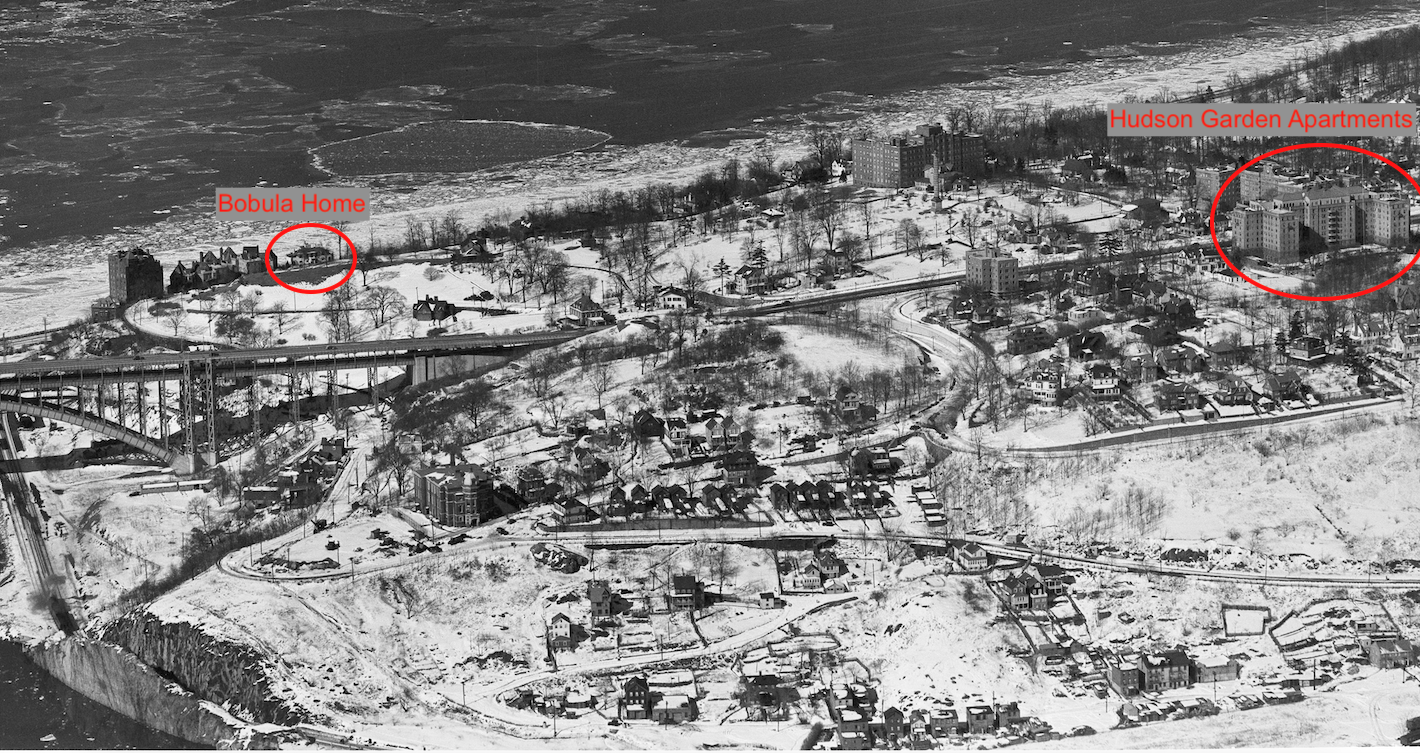
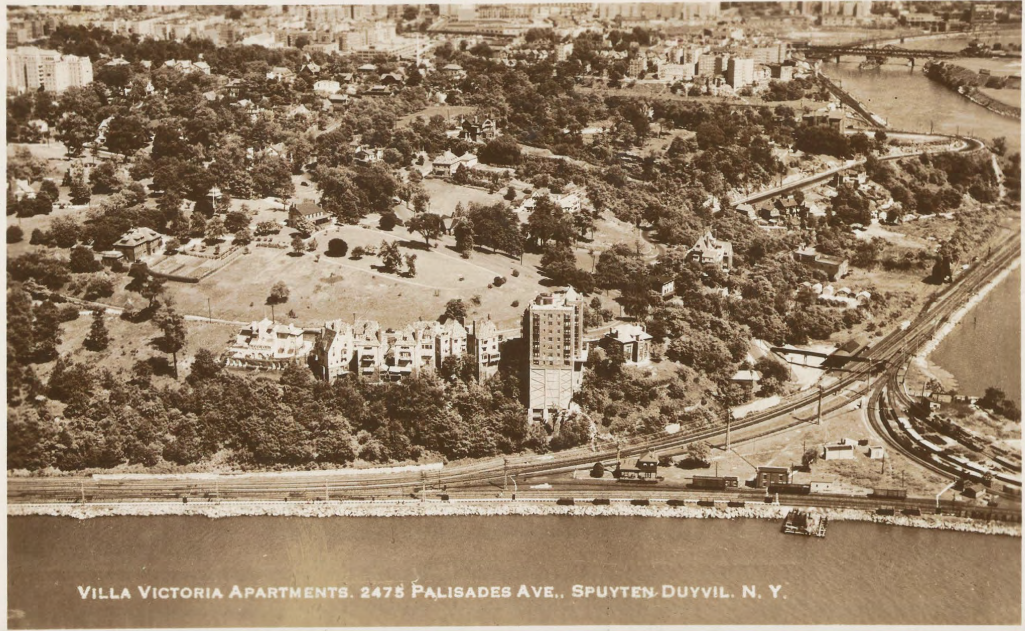 The home of Titus de Bobula is on the bottom left, just to the north of the Villa Victoria Apartments on Spuyten Duyvil. (Thanks to Stephanie for finding this image in the University of Arizona Library Special Collections).
TITUS DE BOBULA:
The November 10, 1923 headlines of the NYT led with the aftermath of Hitler’s infamous Beer Hall Putsch in Munich. But the subheading of that story was about someone who, five years earlier, had been living in the palatial home he designed in Spuyten Duyvil: Titus de Bobula.
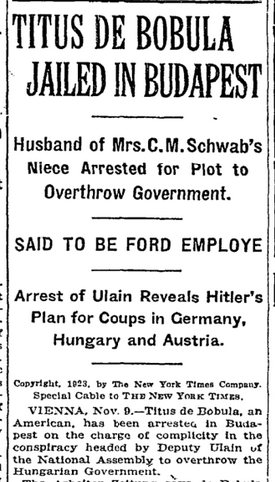
Front page of NYT: 11/10/1923
As unusual as that is, it only gets weirder when you look at the paper trail of odd newspaper stories chronicling the life of Titus de Bobula. But despite his notoriety, he has been completely forgotten in our area, where he left an architectural legacy that nobody knows about.
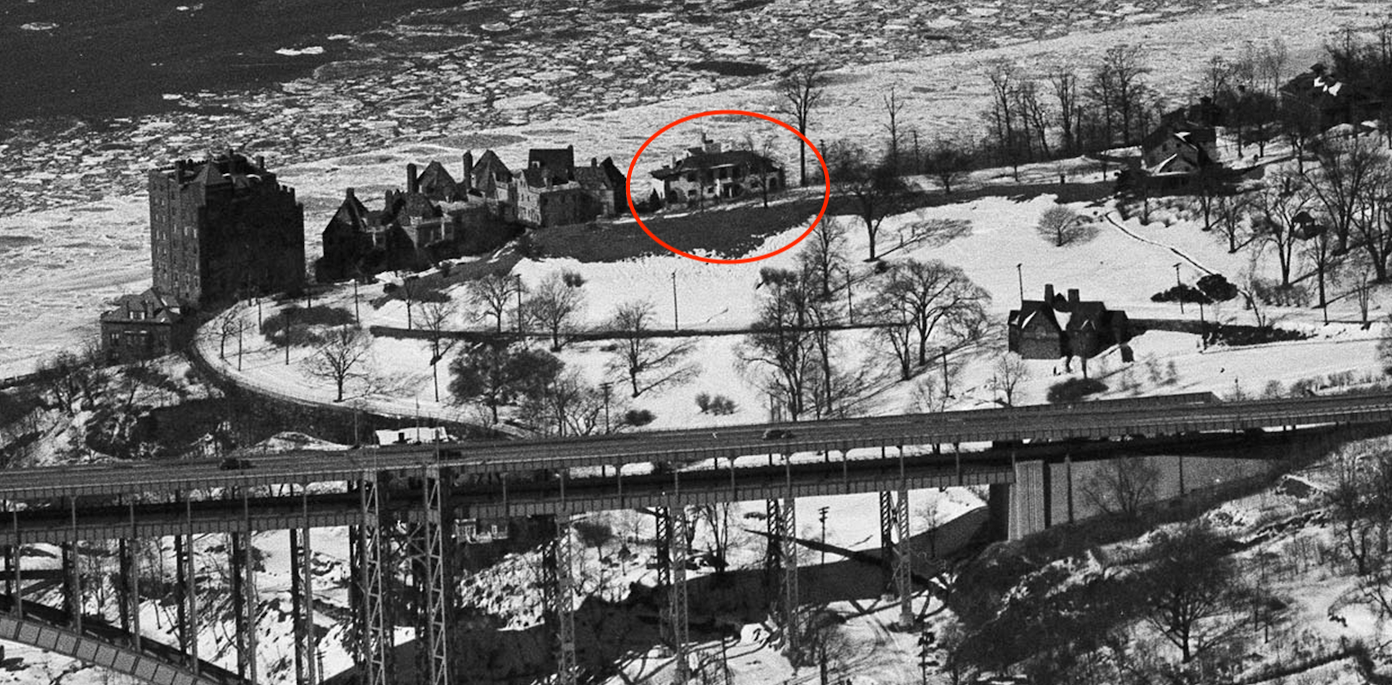
It is hard to know where to begin with Bobula’s story but I first learned about him from an email from Paul Ostermann-Healey, who saw this post on the Kingsbridge Historical Society forum. In the post, we were trying to identify all of the structures on the southern end of Spuyten Duyvil in this 1940 photo below. One building stood out as not attributable to any known property owner. It stood at the current site of 2521 Palisade Ave, the “La Rive” apartment building:
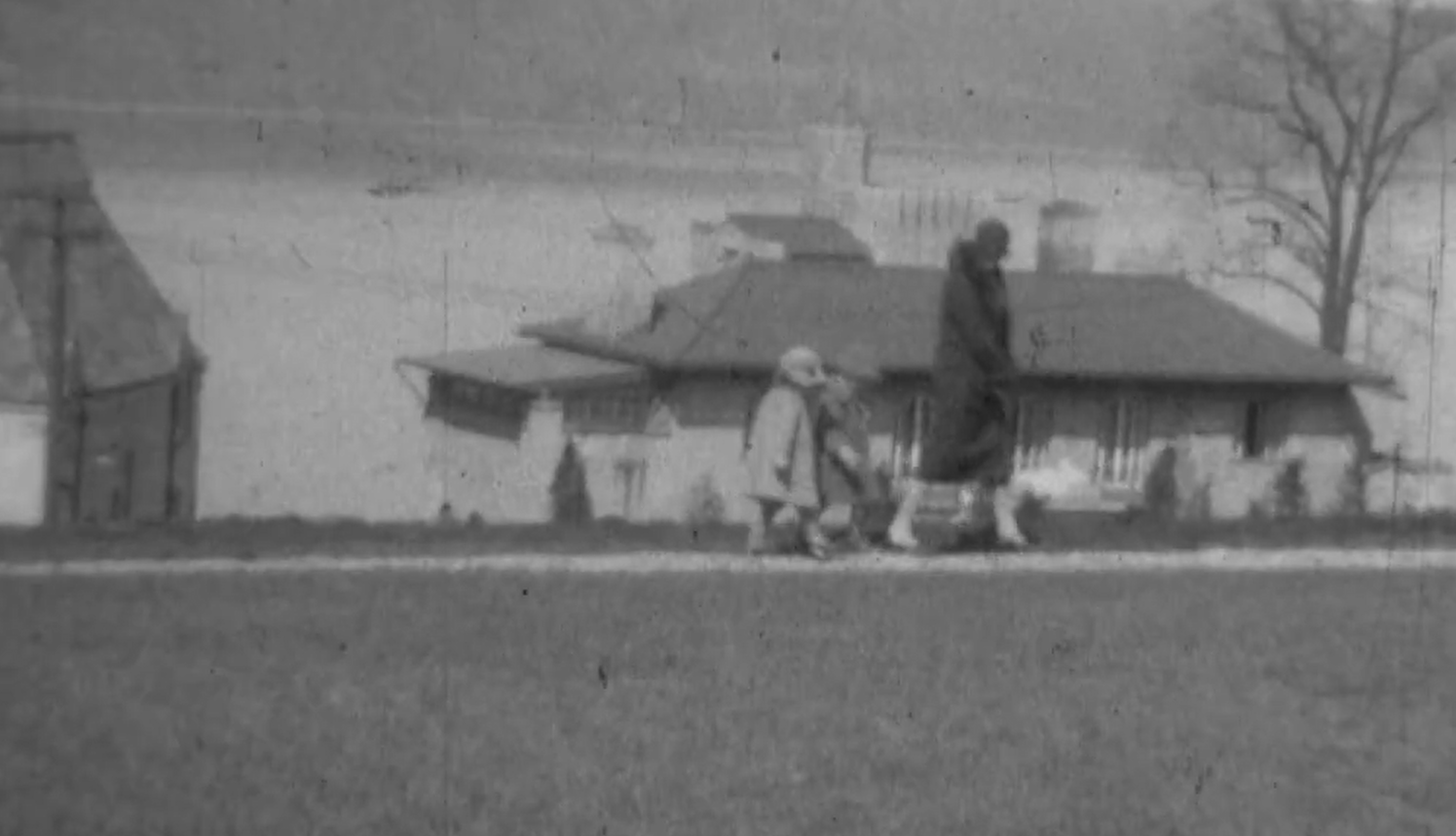 The view from Palisade Ave
I had seen the building before but I never knew who lived in it until Osterman-Healey wrote to say that it was designed by the eccentric architect Titus de Bobula and that it was featured in an issue of The American Architect:

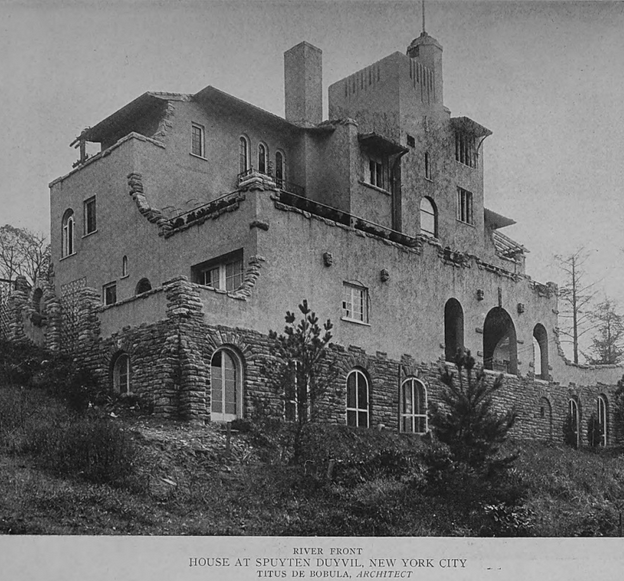
The article states that the home was designed “so that the fewest possible servants would be necessary” but the description makes it seem like an extravagant palace with a great view. The construction of this villa made news:

New York Sun, 10/8/1918
That article describes Mrs. de Bobula (maiden name: Eurana Dinkey Mock) as the niece of Charles M. Schwab. That’s not the investment guy, Charles Schwab, but rather the earlier Charles M. Schwab, who was the steel magnate who ran Bethlehem Steel. Titus de Bobula met her after he immigrated to America and settled in Pittsburgh. The future Ms. de Bobula was still a college student when he swooped her away to elope before heading off to Europe for a honeymoon in 1910. It was a bit scandalous and it made national news. Some newspaper accounts say she was 19 or 21 at the time of their marriage. One said she was “about 17.”
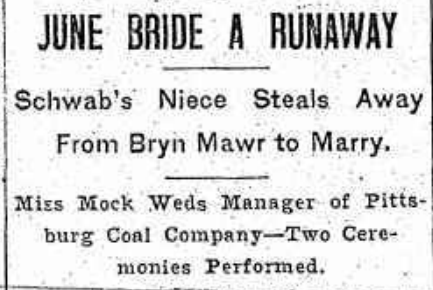
Brooklyn Eagle, June 2, 1910
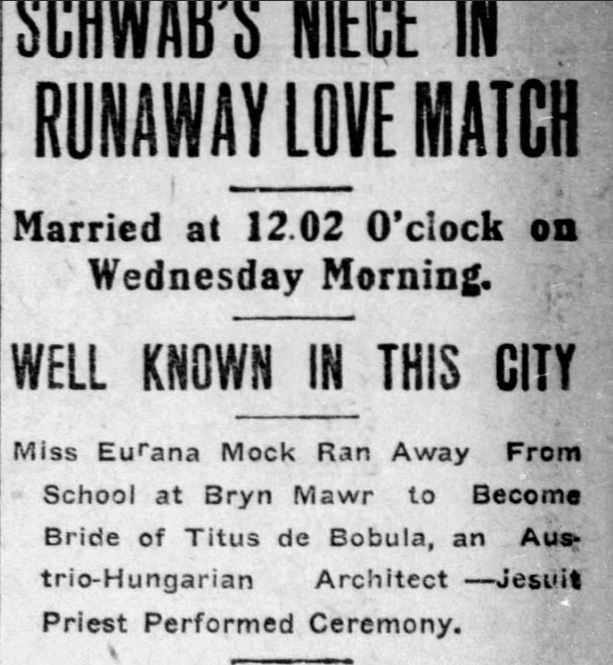
The Morning Call Newspaper, Allentown PA, 6/4/1910
The occasion of Bobula’s elopement wasn’t the first time his name was in the papers for dubious reasons:
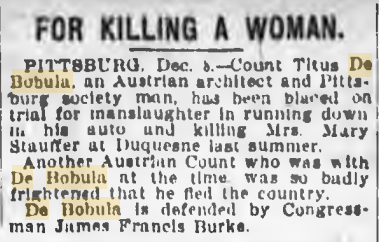
The World, 12/8/1904
The false idea that Bobula was a “count” probably arose from the fact that he added the “de” to his name. In actuality, he was born Titus Bobula and was not of the nobility. As for his personality, Bobula was described as “dishonest, incompetent and a blackmailer” by his wife’s rich uncle, Charles M. Schwab, who was apparently not a fan. Schwab admitted, under oath, that he offered $1,000,000 if Bobula would kill himself. That admission came during a slander lawsuit that Bobula brought against Schwab. Having been involved in a couple failed business ventures and development projects, Bobula was probably hoping to squeeze as much as he could out of his wife’s rich uncle with the slander suit. His personal and business failures in the U.S. might be why he decided to move back to Hungary in the early 1920s. That’s when he coordinated with Hitler’s allies to attempt to overthrow the Hungarian government. After getting caught in Hungary and thrown in jail, the American delegation got him out and he returned to the U.S.
One of his failed businesses in the U.S. was a munitions company that folded after some kind of falling out with Hans Taucher, his business partner. This led to a couple more oddball stories in the newspapers:
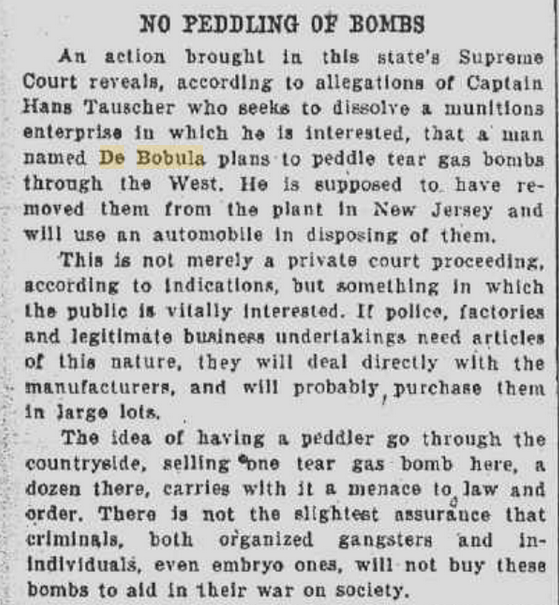
Scenectady Gazette
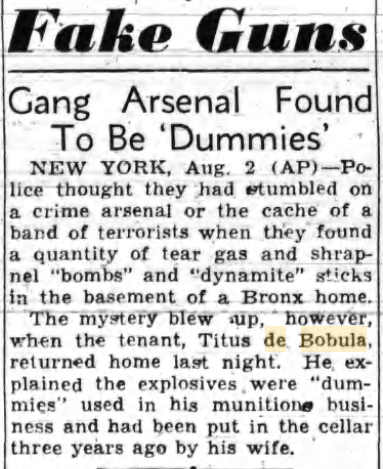
Albany Times Union 8/3/1939
But as chaotic as his life was, he managed to design some interesting buildings. These are photos from the “known buildings” section of his Wikipedia page:
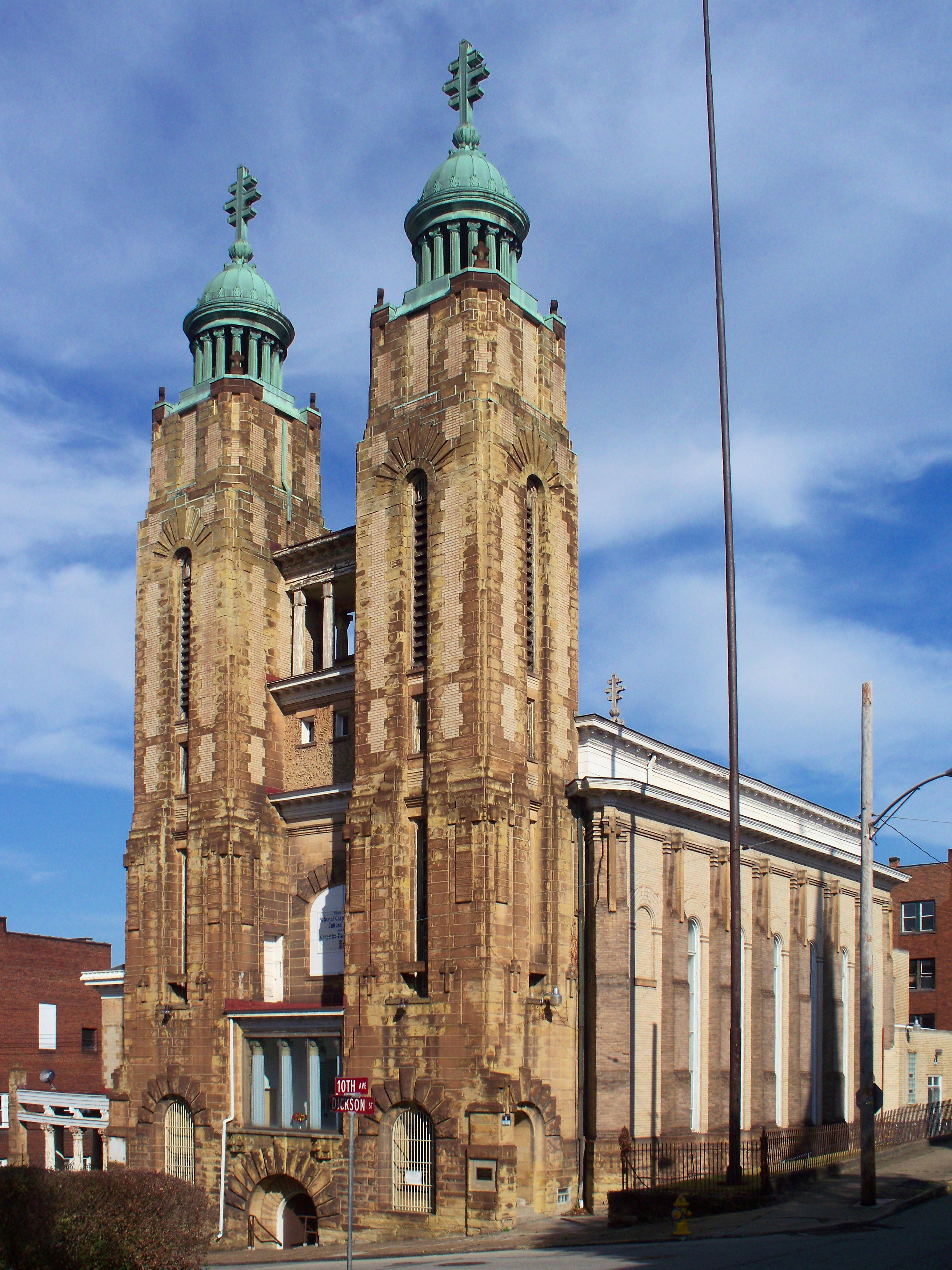
St. John the Baptist Greek Catholic Church, Munhall
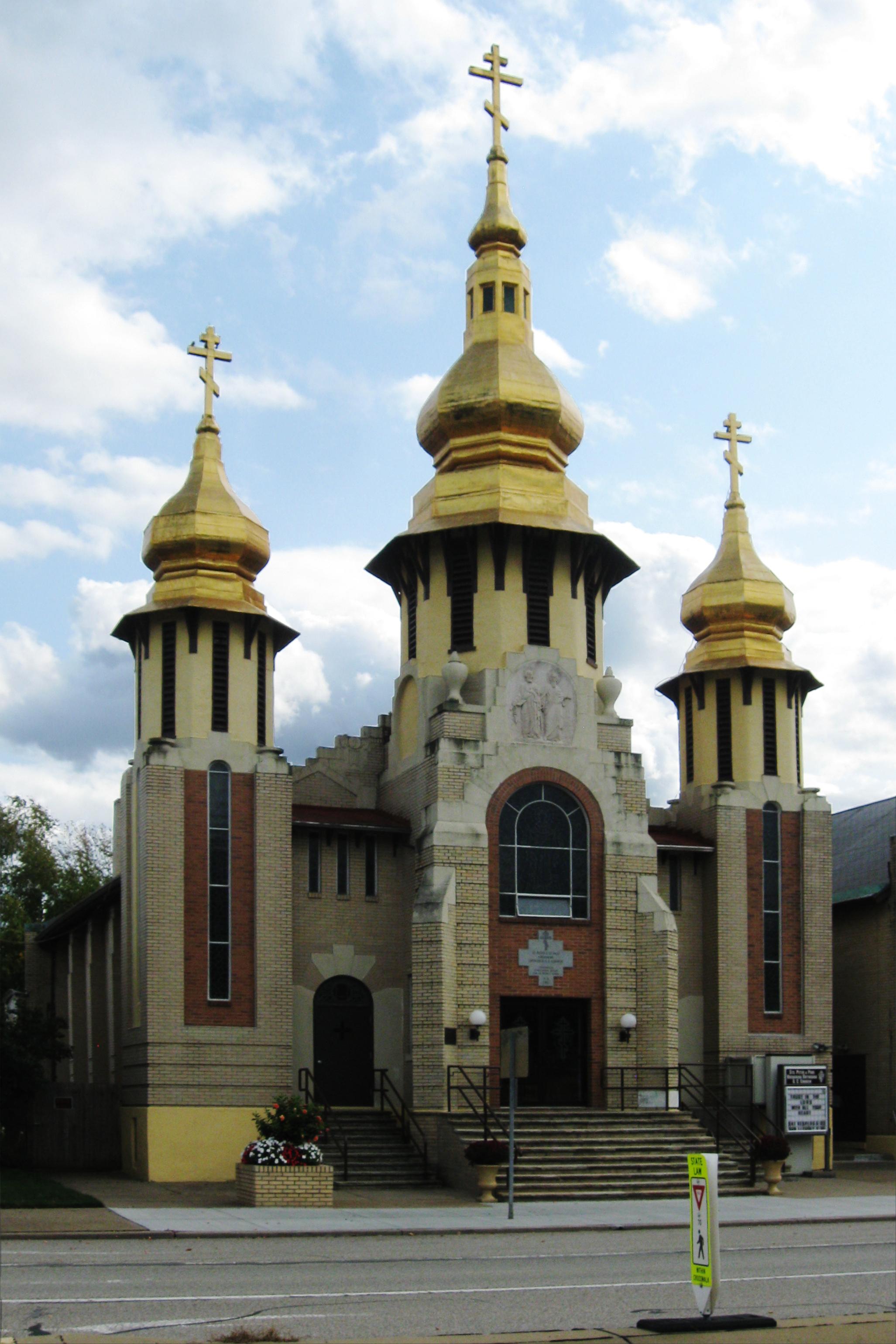
Sts. Peter and Paul Greek Catholic Church, Carnegie
But, after some digging around, I think another building should be added to his list of known buildings (even if you won’t ever see his name attributed to it): the Hudson Gardens apartment building in Spuyten Duyvil. You can see the building it in the same 1940 aerial view that shows Bobula’s home:
And of course Hudson Gardens still stands today as one of the more ornate apartment buildings in the area:
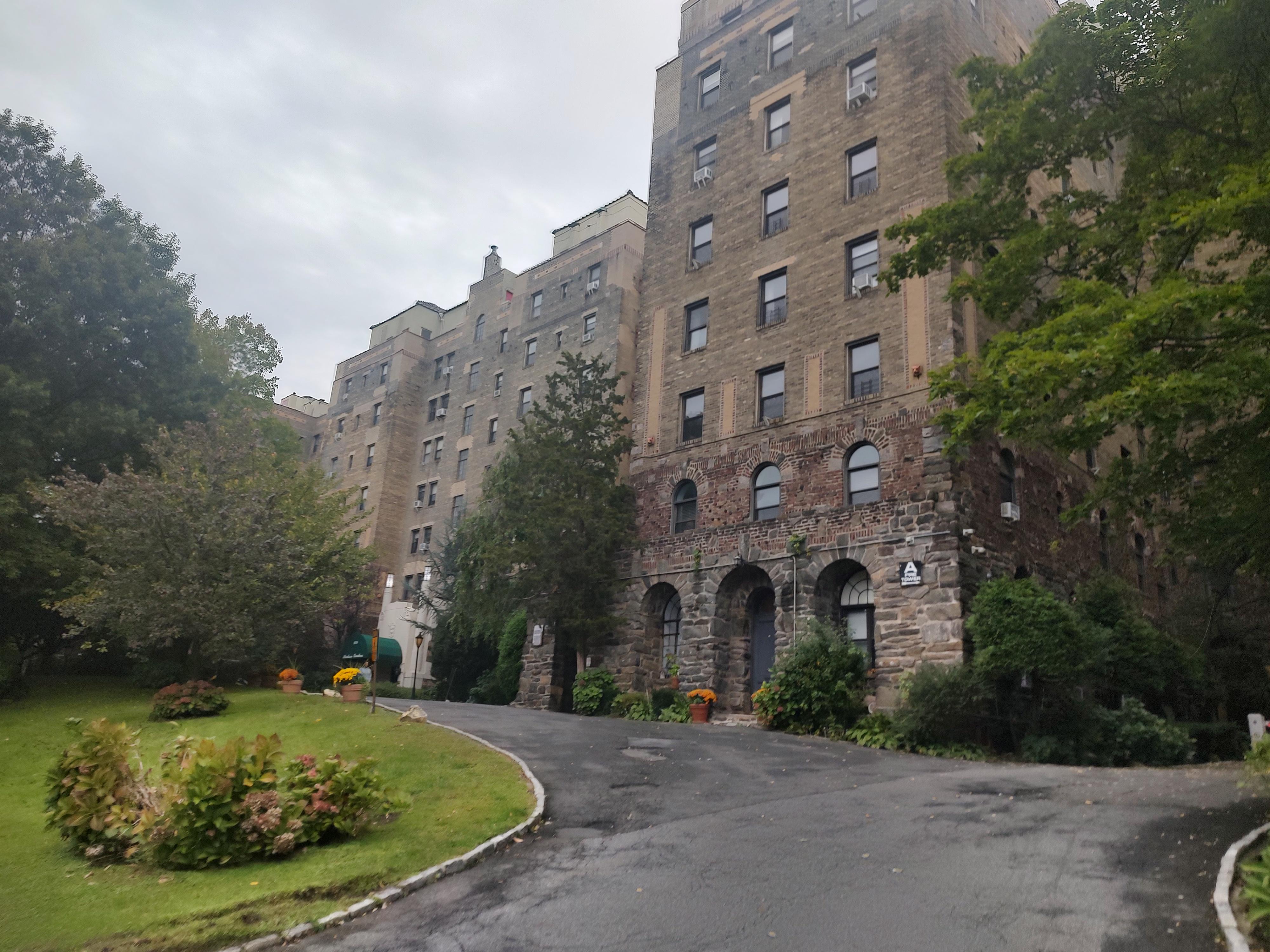
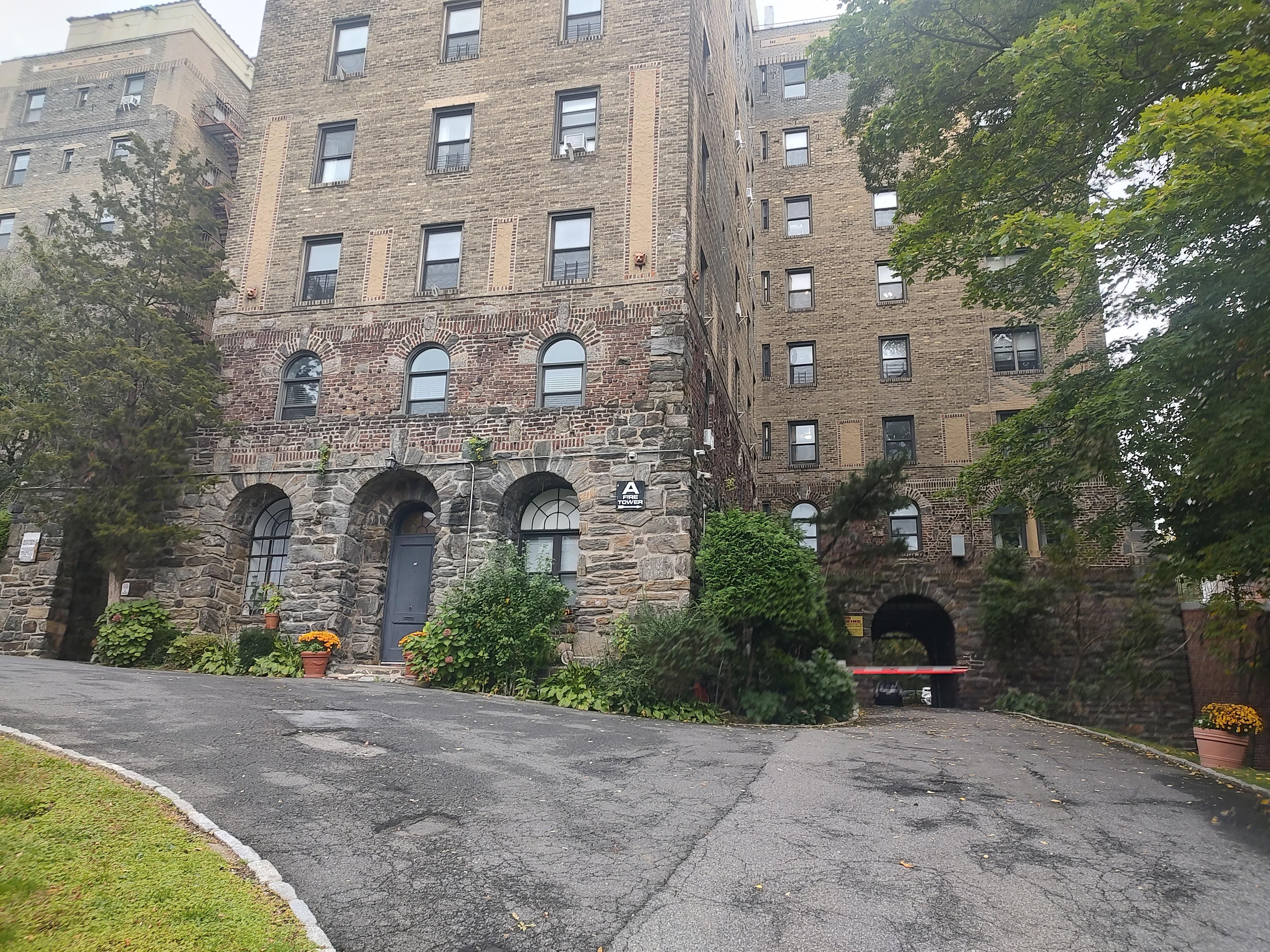
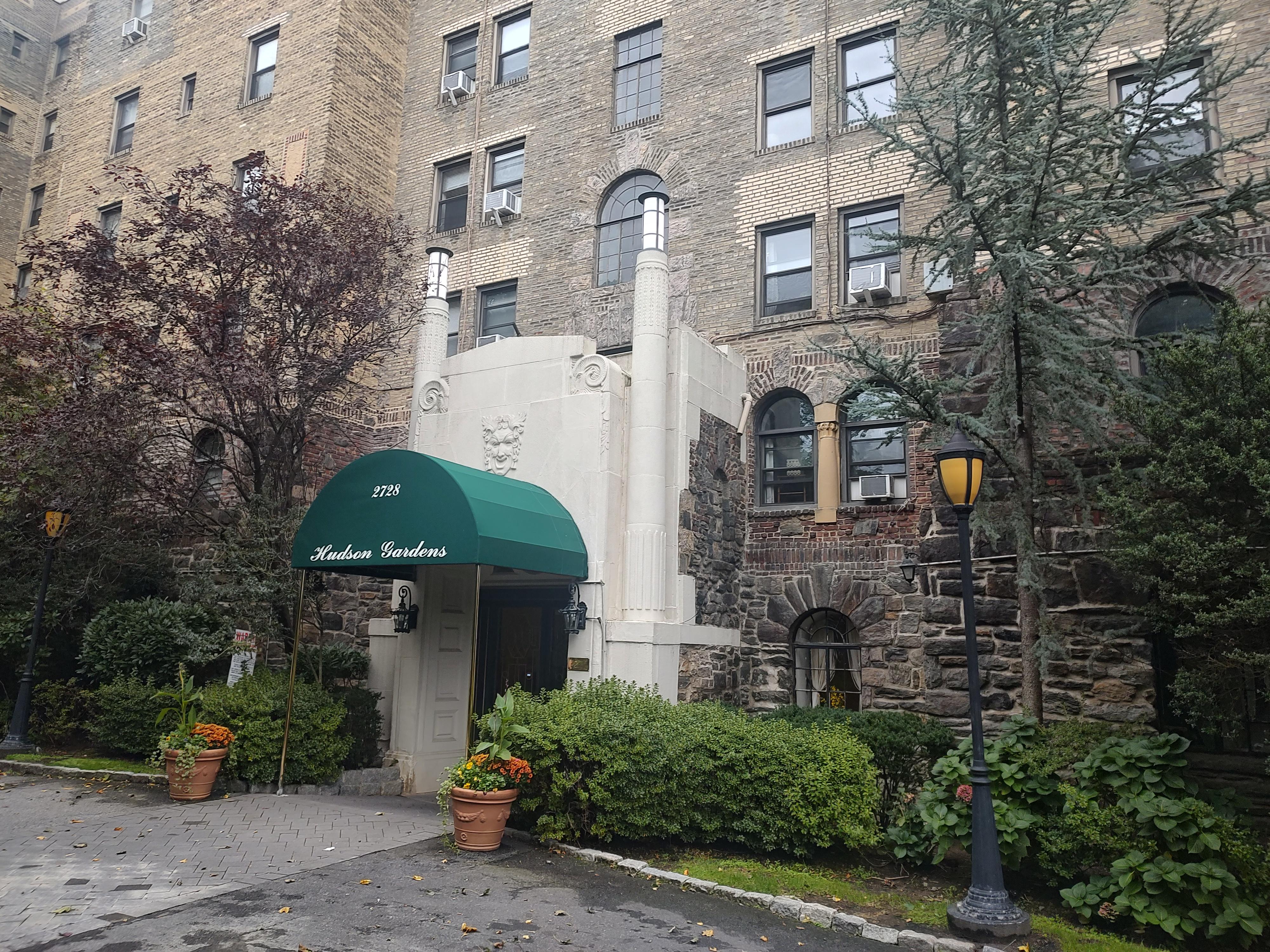
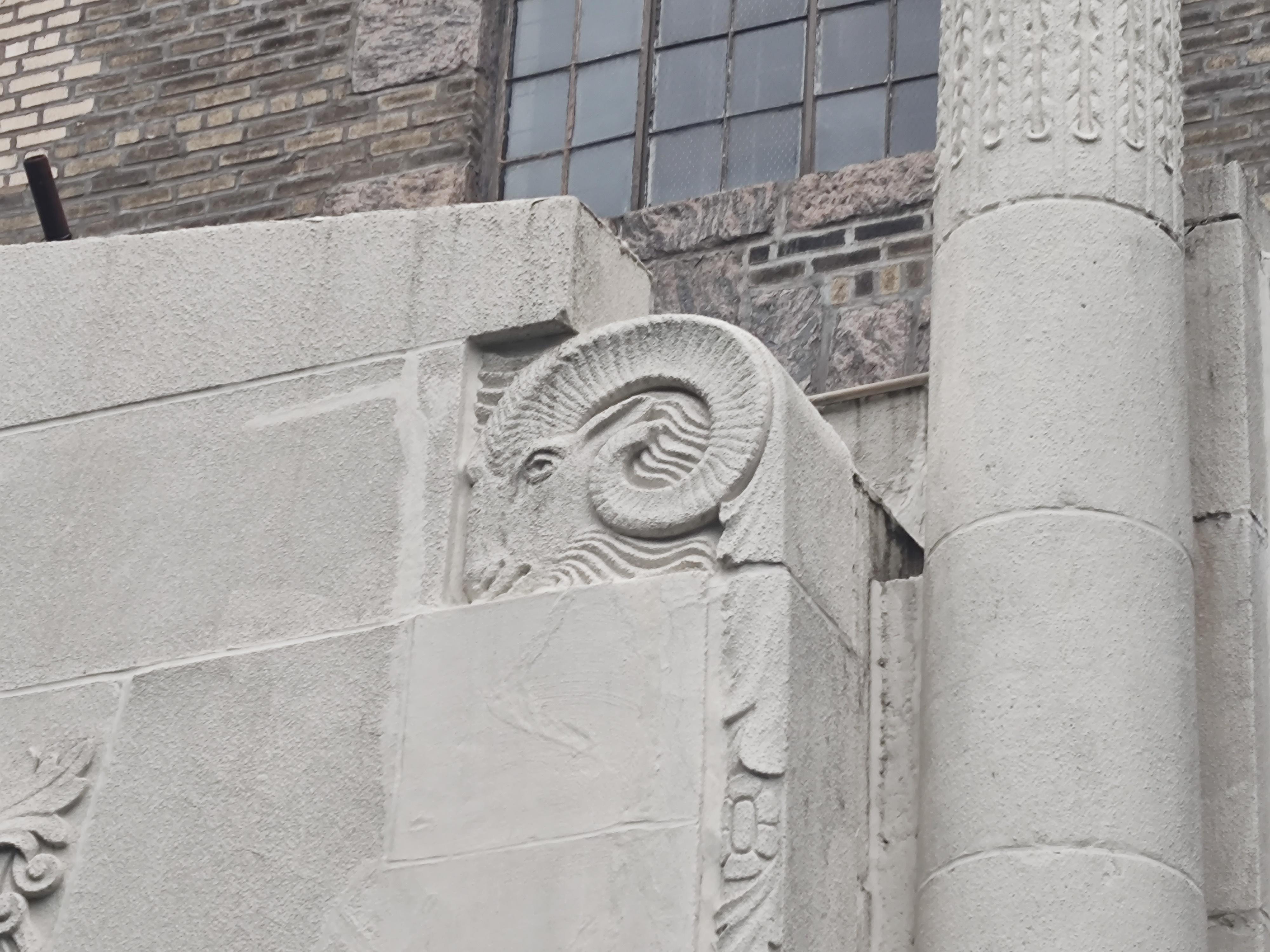
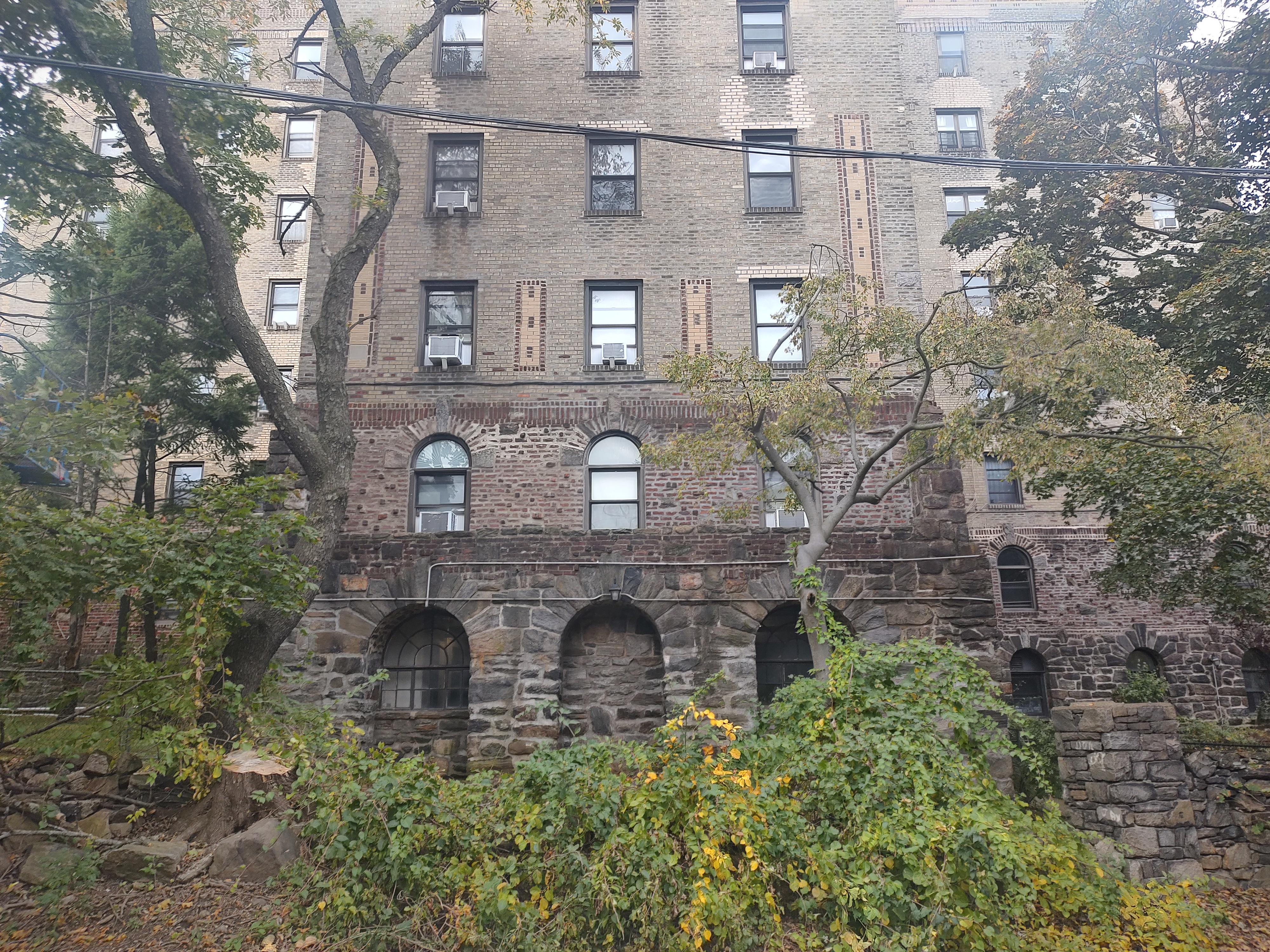
The old sales brochures for Hudson Gardens did not mention de Bobula (perhaps due to his ties to fascism?). The building had difficulties getting to market. But its construction was noteworthy…
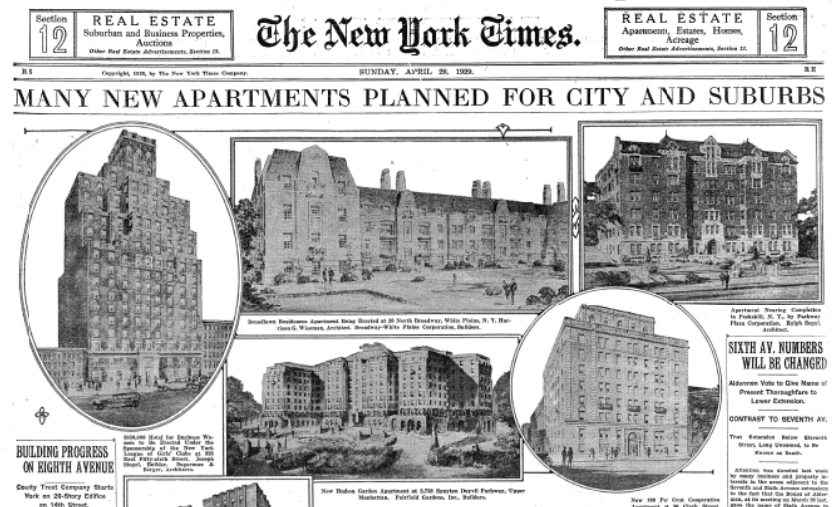
A closeup of the front page of the NYT on 4/28/1928
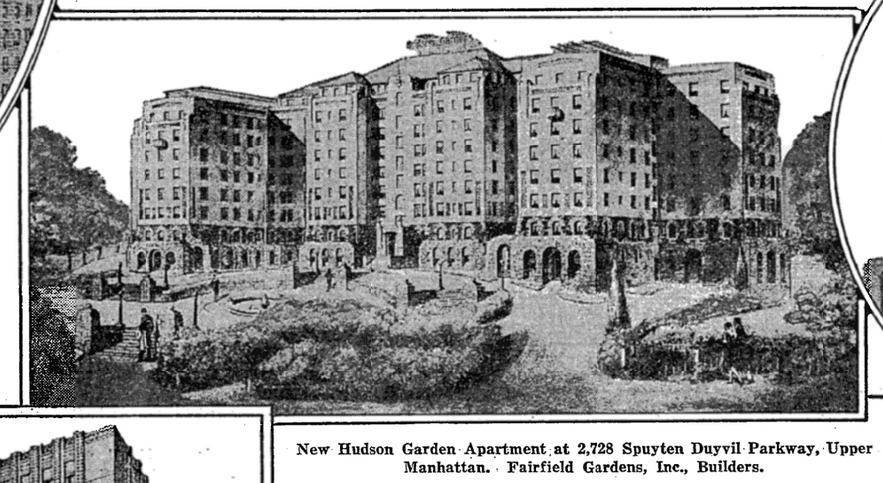
Notice the caption “Fairfield Gardens, Inc. Builders.” Hudson Gardens sits at the end of Fairfield Avenue and the building was originally called “Fairfield Gardens.” In May of 1928 the Riverdale News announced its construction with a dramatic reflection on the history of our area.
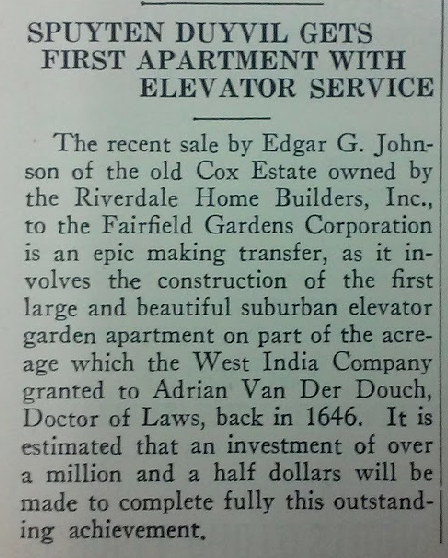
The building was sold in 1932 after some financial problems. It looks like it was renamed “Hudson Gardens” after that. But only when you look for the architect of “Fairfield Gardens” do you find Bobula named as the architect:
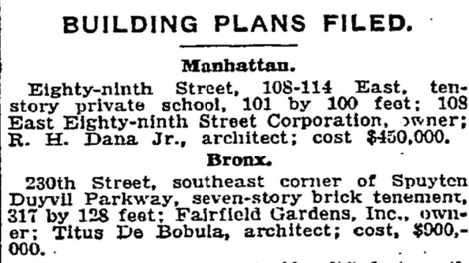
5/26/1928, NYT
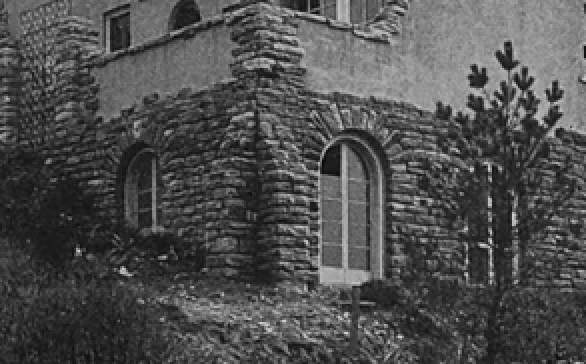
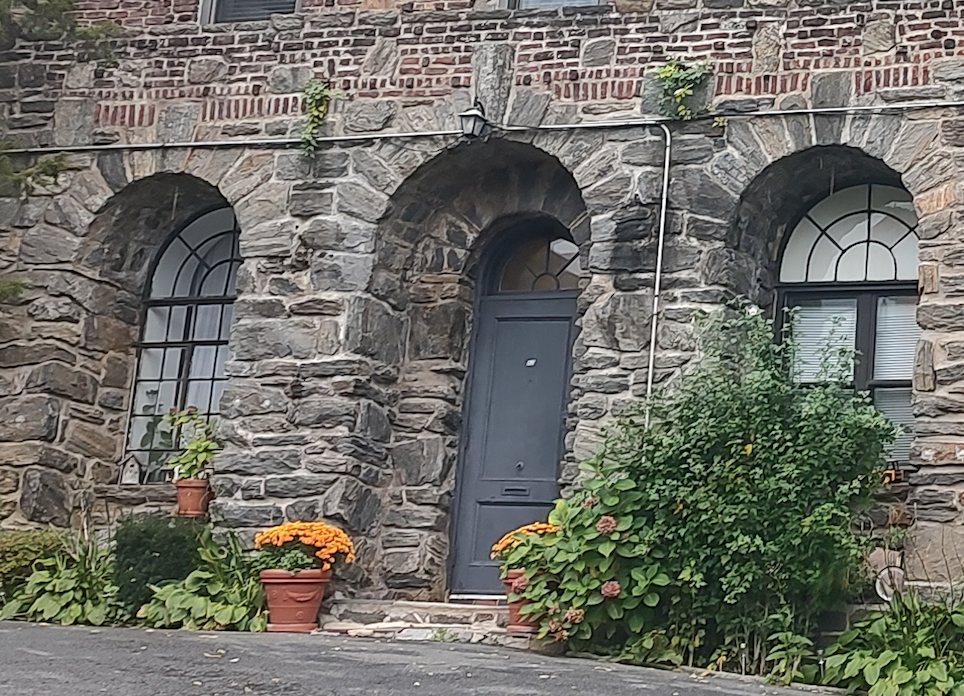
The architectural magazine article about Bobula’s house mentions a term I never heard before: “cyclopean masonry.” In this case, that refers to building with large stones (the kind that a cyclops might be able to pick up). You can see the heavy stone archways in the design of his home, the Hudson Gardens apartment building, and some of his other buildings.
-
February 11, 2026 at 10:28 am #5150
Well done Nick ! Time for you to update this edition.
-
February 13, 2026 at 5:12 pm #5152
It’s a shame that de Babula’s home was razed. It looks so interesting.
I like his use of “cyclopean masonry” which makes his buildings look impressive as evidenced in the pictures above.
I wonder what happened to his wife, Eurana, or where they both are buried.
-
-
AuthorPosts


- You must be logged in to reply to this topic.