
Forum Replies Created
-
AuthorPosts
-
I think you’ve probably found all of Revere’s rides through the neighborhood. I found this article with a reference to David Hackett Fischer’s book about Revere. I am not sure if you checked that book out already.
I read that Paul Revere was stationed at Ft. William Henry upstate during the French and Indian War. I am not sure if his unit ever had to pass through New York then. Could he have travelled on business trips to New York after the war?
April 8, 2018 at 7:28 pm in reply to: The Enslaved People of Riverdale, Kingsbridge, and Spuyten Duyvil #413Thanks for sharing this, Tom. These sorts of advertisements are the closest thing these people had to a biography. They always seem to raise more questions. Interesting that Andrew Saxton was Catholic. I wonder how common that was. It is also interesting that he had a skilled profession–that of cooper. The Van Cortlandts also had an enslaved person working as their miller (described above). It just goes to show how much of the family business relied on slavery. Enslaved people probably harvested the wheat, milled it into flour, and made the barrels to have it shipped.
It has been said that there was an African burial ground in Van Cortlandt Park. The condition of the remaining gravestones in Van Cortlandt is of great concern to me but I will write about that here. I want to keep the focus of this thread on the enslaved people in the area because there is still many more stories to tell.
April 5, 2018 at 11:19 pm in reply to: The Enslaved People of Riverdale, Kingsbridge, and Spuyten Duyvil #409I am sure that’s true. The local Black people had to be buried somewhere close by. I would like to find some kind of documentary evidence for it being at that location. Are you aware of any? I know the NYHS has some Van Cortlandt family documents and some day I will look through them for any kind of reference to the slave burial ground. Also, the Westchester Co. Historical Society has a lengthy diary of one of the Van Cortlandts that has never been transcribed–I wonder if anything is in there. I did just find this about the cemetery and another burial place at Sedgwick Avenue. It is from the New York Genealogical and Biographical Record Volume 20. I was kind of surprised when I saw the author–none other than Thomas Henry Edsall (the first local historian)! No mention of the African burial ground, though.
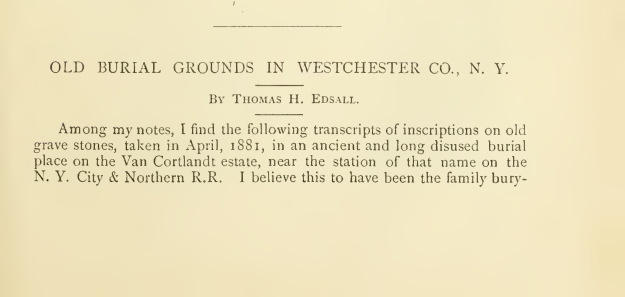
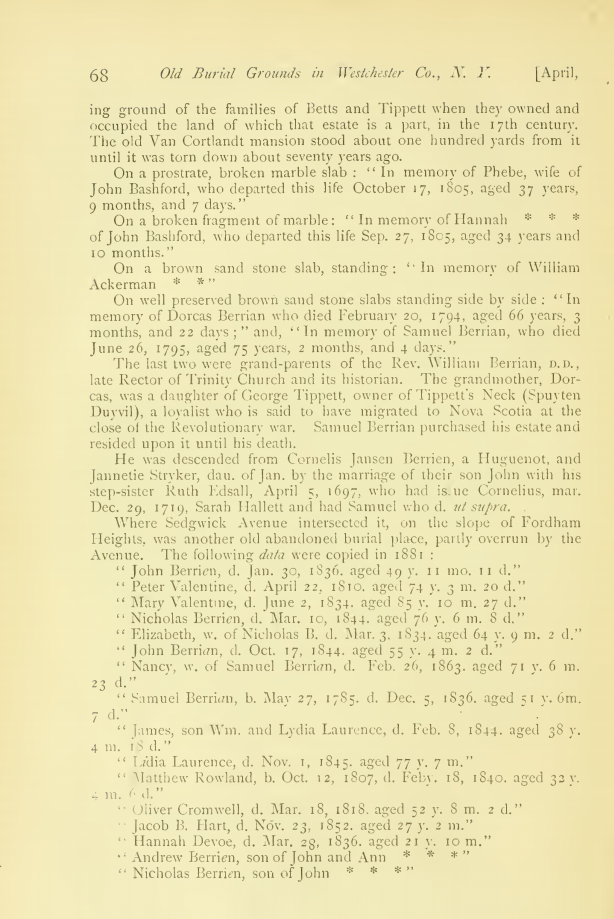
Is this the one you’re talking about?
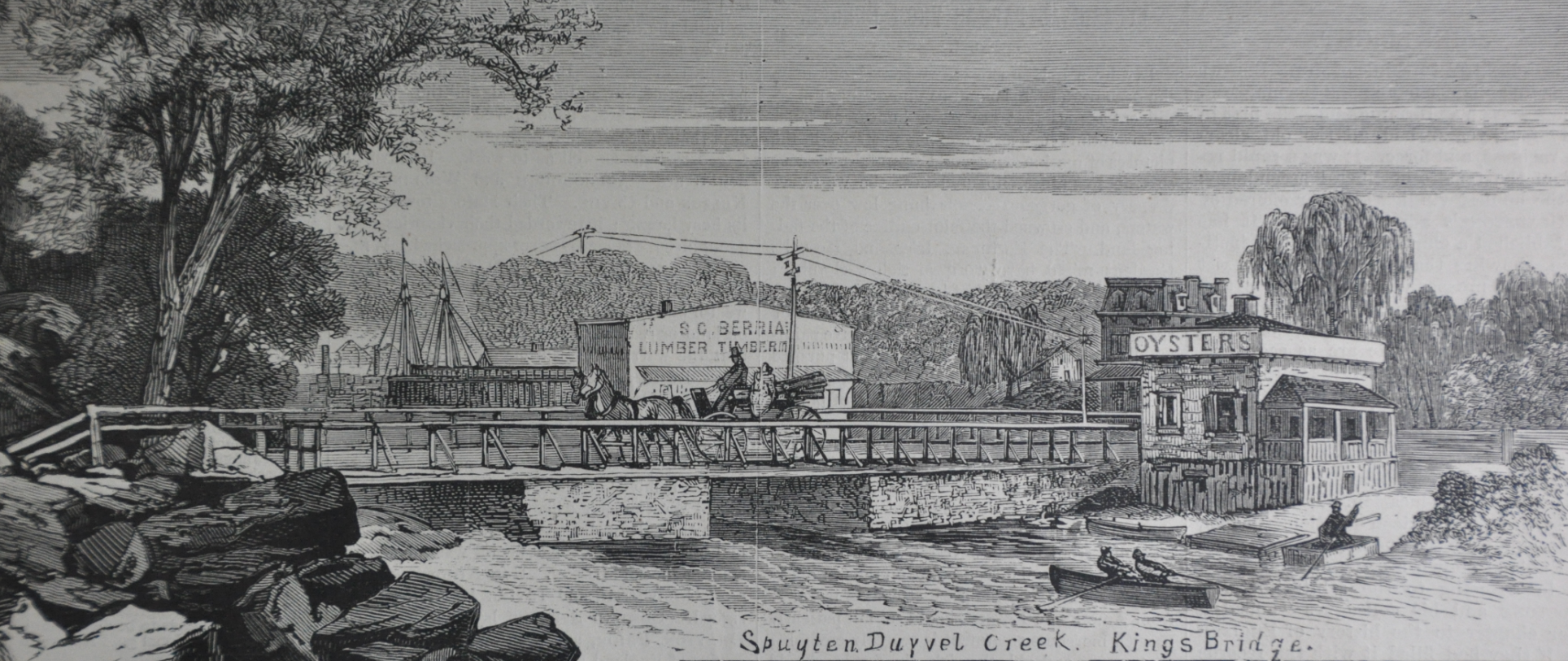
There are so many details in this one that I love.
- The simplicity of the bridge
- The oyster shack
- SC Berrian Lumber – The Berrians were some of the earliest settlers in the area
The one question I have is exactly what is the perspective here? I am thinking looking northwest from the Manhattan side, which would make the hill in the background Spuyten Duyvil. But if that’s true, the house in the background with the mansard room could not be the McCombs/Godwin mansion–so I’m not sure.
April 3, 2018 at 3:27 am in reply to: The Enslaved People of Riverdale, Kingsbridge, and Spuyten Duyvil #387Enslaved people also inhabited what is probably the oldest house in The Bronx–the Van Cortlandt Mansion in today’s Van Cortlandt Park. Jacobus Van Cortlandt (1638-1739) purchased the property in the late 1600’s. A 1698 census of “Fordham and Adjacent Places” listed the people held in slavery by Jacobus’ Van Cortlandt as: “hetter, tonne, marce, and hester.” By the time of Jacobus’ death, he had more enslaved workers, which he willed to his son, Frederick. According to Jacobus’ will of May 12, 1739 Frederick Van Cortlandt was to receive Jacobus’ “Indian Man Slave named Pompey [his] three Negro men Slaves called Piero John and Frank and [his] two Negro Women Hester & Hannah togr. with all the Children that are already or hereafter shall be born of the Body of the said Negro Woman named Hester (except such of the said Children as I may think fit in my life time to dispose of by Deed or Gift or otherwise).” In 1748, Frederick began work on the Van Cortlandt Mansion.
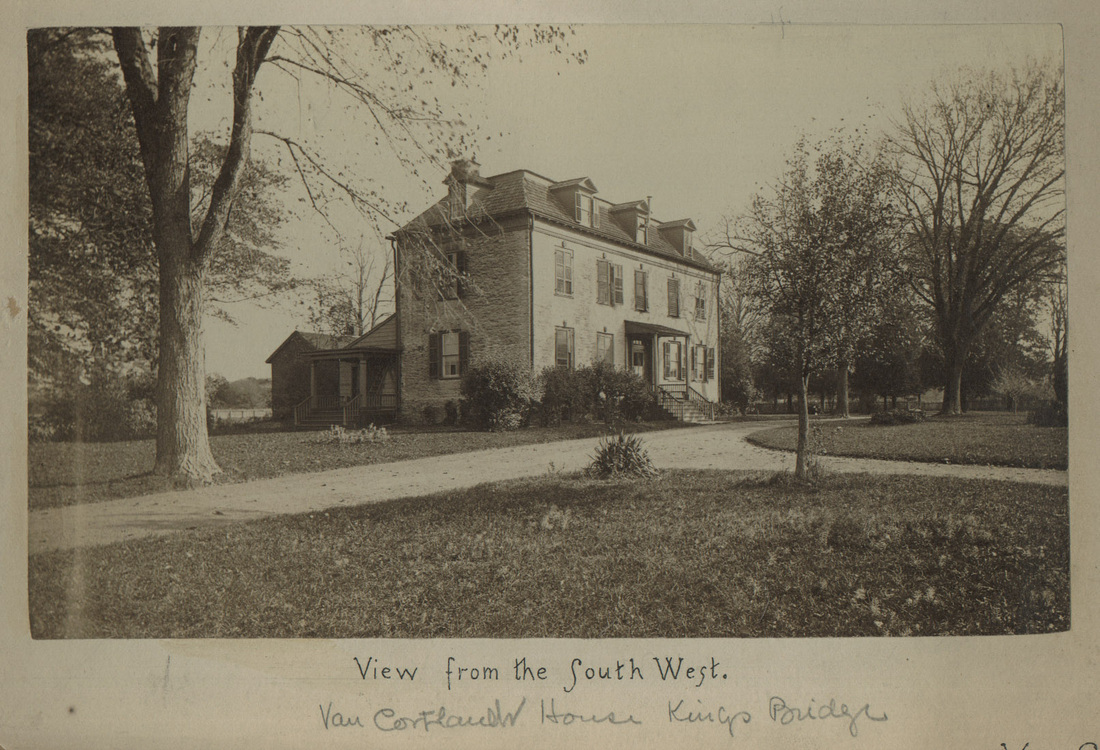
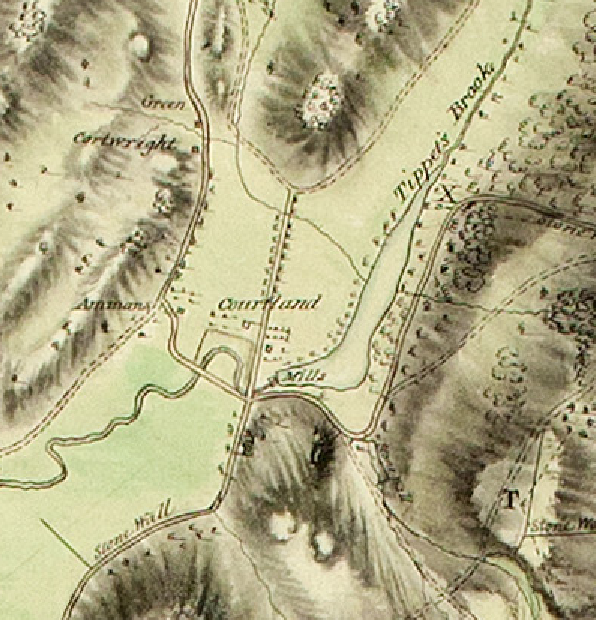
In 1749, Frederick wrote his will. The number of enslaved people on the family estate only increased in the 10 years after his father’s death. Frederick bequeathed “unto [his] wife Frances [his] two Negro Girl Slaves Mary and Hester with my two and four wheal chaise to sell or dispense of as she . . . shall think fitt.” Along with the mansion, he left to his son James Van Cortlandt: “[his] Negro Man Levellie the Boatman, and all my wagons, plows, and utensils, in full bar to all claim as [his] eldest son.” Frederick’s will continues: “I do also give and bequeath unto my said Son James the following Negro Slaves to witt piero the Miller and Hester his Wife and little Pieter the Son of Piero with my Indian Man Cesar and Kate his Wife. . . I give and Bequeath unto my daughter Anne the negro Girl called Hannah and to my Daughter Eve the Negro Girl Sare. . . To my Son augustus I give my Negro boy Claus and to my Son Frederick I give my Negro Boy called little Franke.” That is a total of 12 slaves. In Frederick’s will we find the second reference to an enslaved Indian person. His father had an enslaved Indian named Pompey and Frederick held an enslaved Indian named Cesar, who had a wife, Kate. It makes me wonder just how common Indian slavery was in the area. Frederick’s slave, “Piero the Miller,” is also noteworthy. In those times, millers were considered skilled professionals–given the complex mechanics of water mills and the difficulty in maintaining millstones. I wonder how common it was for slaves to have these sorts of occupations. Curiously, at Frederick Philipse’s “Upper Mills” on Philipsburg Manor, another enslaved person, Cesar, was also working as a miller. Apparently, Cesar made a small fortune for Philipse, who charged the neighboring farmers a percentage of their grain for the right to use the mill–on top of the rents he charged them for the land. Perhaps Piero made a similar fortune for the Van Cortlandt family. The Van Cortlandt mill, pictured below, was located at the southern end of Van Cortlandt lake, and stood until 1911 when it burned down.
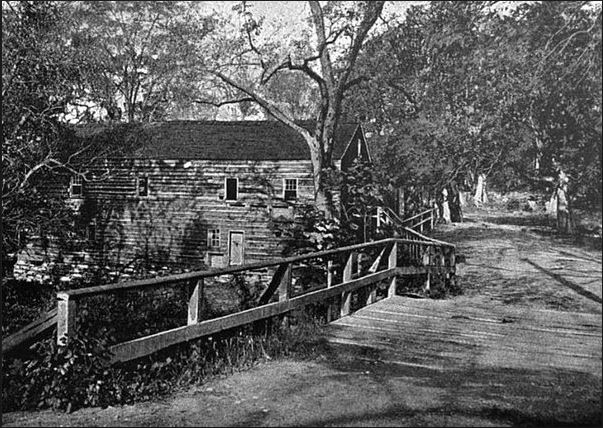
Its location is labeled in this British intelligence map from the American Revolution (a small section of a map that can be found at the Clements Library at the University of Michigan):
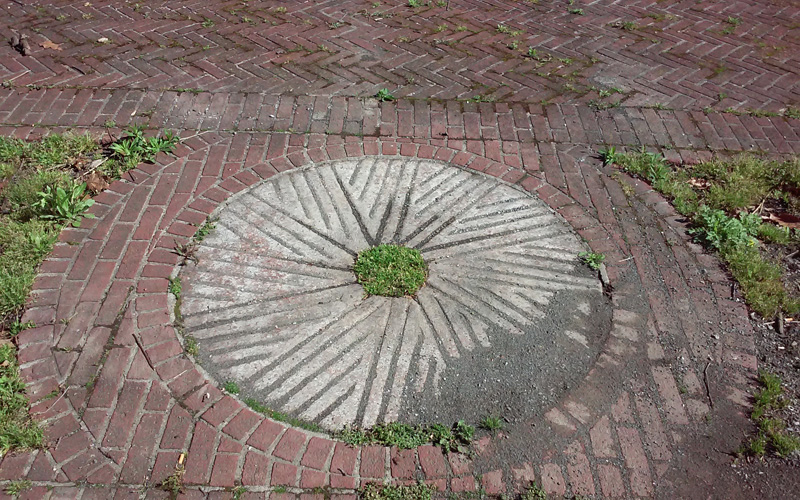
One of the millstones can still be found in the park in the brick walk south of the mansion.
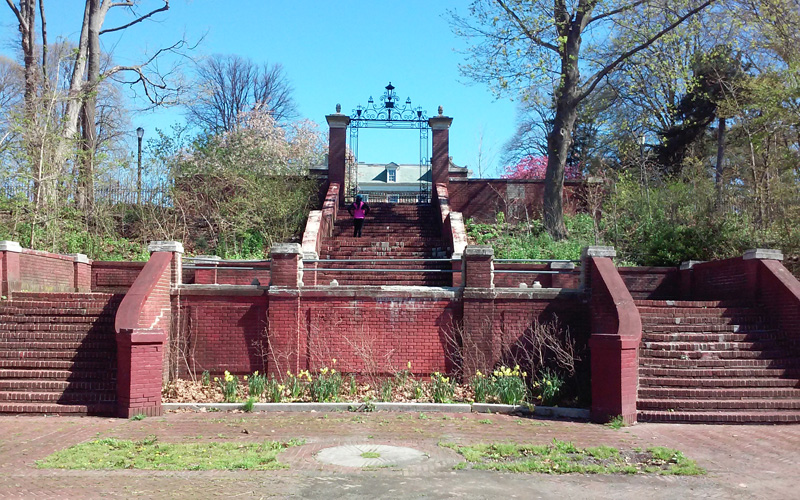
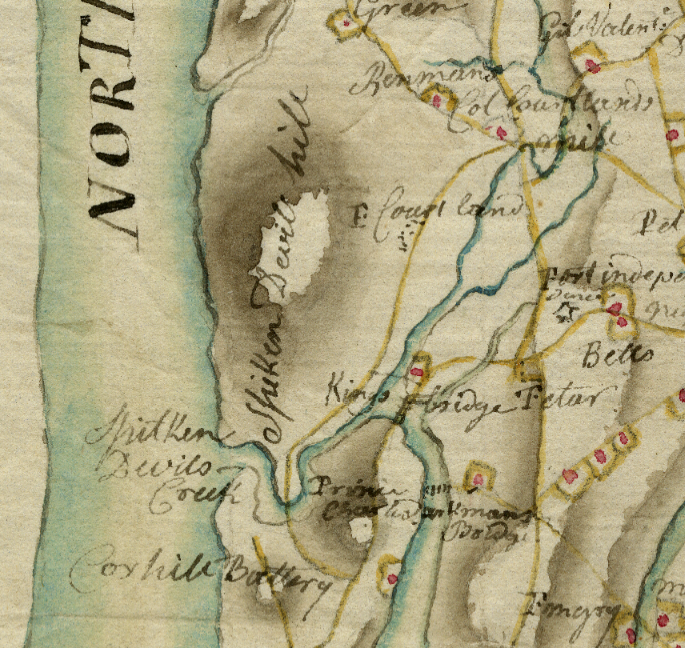
James Van Cortlandt inherited the majority of the enslaved people and he lived with them at Van Cortlandt mansion. His brother Frederick (Frederick Van Cortlandt II), who inherited a little boy named Franke, also lived in the area but not at the mansion. Frederick Van Cortlandt II lived at the “Upper Cortlandts,” in the vicinity of present-day Ethical Culture Fieldston school near West 238th Street. There was a Hessian Jaeger encampment there during the American Revolution and, despite the lack of documentary information, it is depicted on several maps such as the one below from Historic Hudson Valley, where you can see “F Courtland” labeled to the southwest of “Col. Courtlands”:
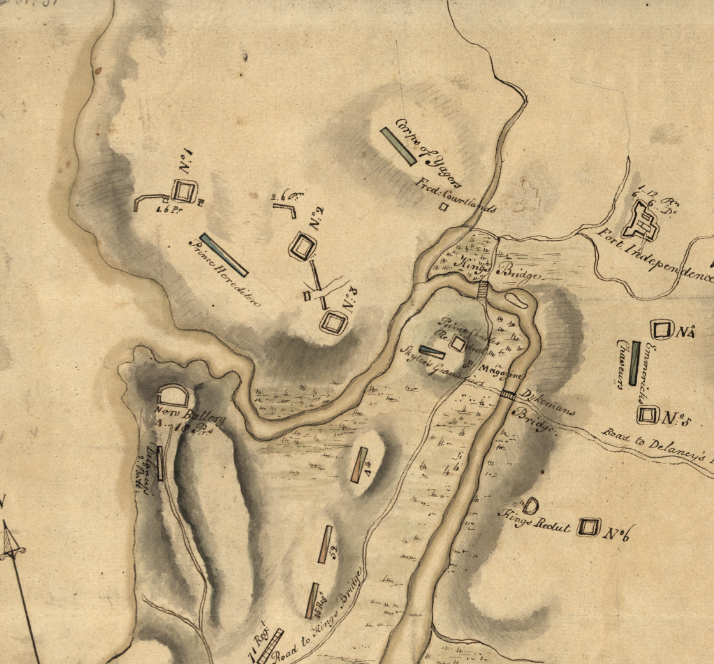
The below map from the Library of Congress depicts the area around Kingsbridge in 1778 and shows “Fred Courtlands” west of Tibbett’s brook by the “Corps of Yagers.” This would be the height now occupied by the Fieldston School’s campus.
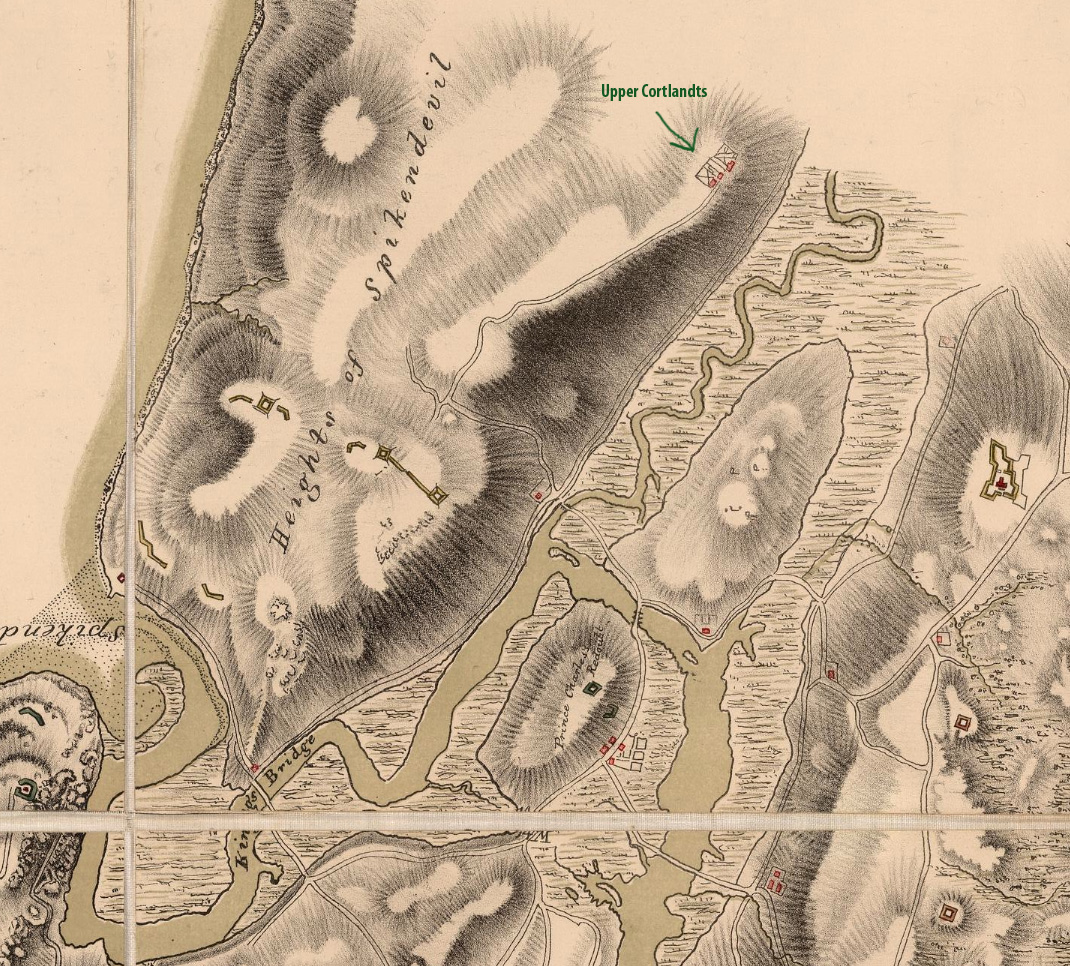
The 1782 British Headquarters map gives the most detailed depiction of the “Upper Cortlandts” showing three buildings:
Frederick Van Cortlandt (the First) left several enslaved people to his wife, Frances Van Cortlandt, who died in 1780. Her will dated 1771 states:
My will further is, that my said Daughter Ann Van Horne may have the Choice of any one of my Negro Girls, which I shall leave undisposed of, at the time of my Decease. Item I give and bequeath my Negro Girl Susan to my Daughter Eve and my Negro Wench Hester, and my Negro Boy Pero unto my Son Frederick. Item my Negro Man John who now lives with my Said son James I leave and bequeath unto him. Item all the rest Residue and Remainder of my whole Estates as well as well Real and personal whatsoever and wheresoever, I give Devise and bequeath unto my five Children James, Augustus, Frederick, Ann and Eve, and the Heirs Executors Administrators and assigns for Ever, Equally to be shared and divided between them share and share alike.
This brings the total number of enslaved people that Frederick Van Cortlandt II inherited to three. Apparently, however, he felt that he needed more and by 1790, according to the census, Frederick held nine enslaved people. It stands to reason that they lived with Frederick II and his wife at their residence at Upper Cortlandts near today’s Fieldston School Campus.
In 1909 the City History Club of New York published a Historical Guide to the City of New York. It is basically a mix of local lore and real history and it contains some interesting notes about this “Upper Cortlandts” area. Below is a map from the book:
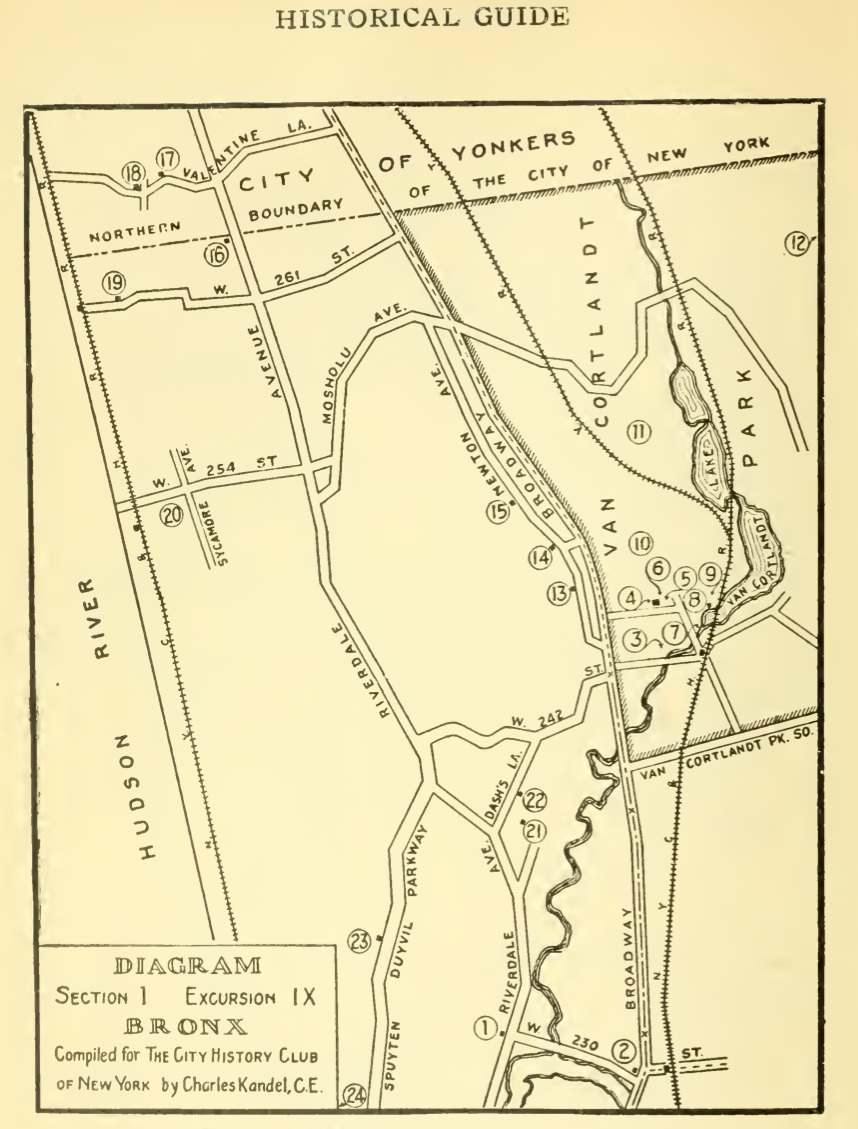
Points 21 and 23 on the map are located right in that area around 238th Street between Waldo Avenue and Riverdale Avenue. The points are described below:
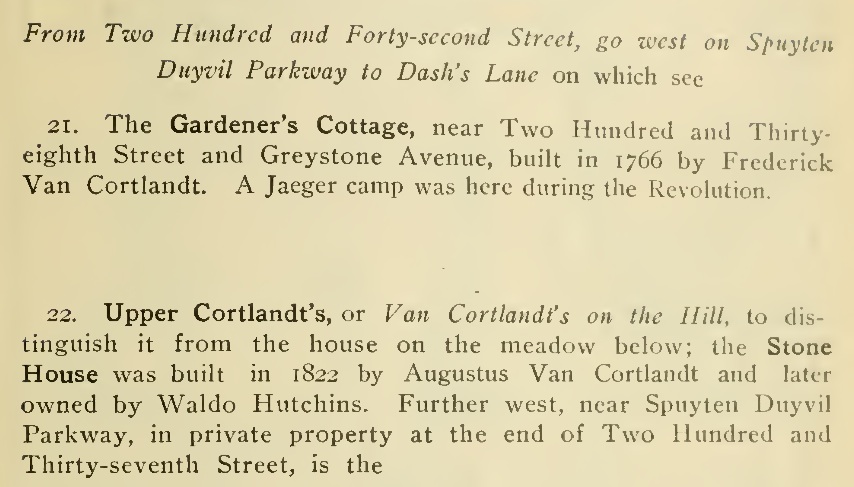
If it is indeed true that the Waldo Hutchins estate house incorporated Frederick Van Cortlandt’s dwelling, then images of the building do exist. The below photos are taken from the auction pamphlet distributed for the sale of the Waldo Hutchins estate.
The photo on the cover depicts a building clearly built after the 18th century: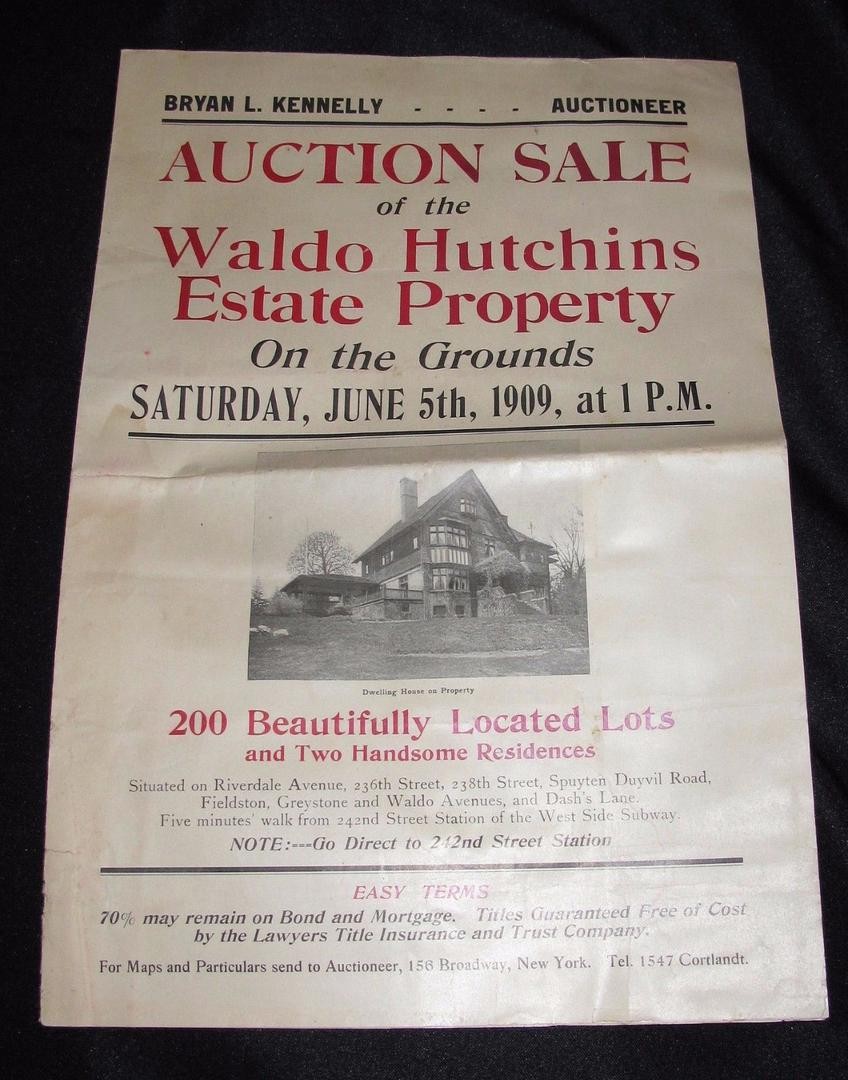
Inside, however, we can see photos of an older looking house captioned: “Hutchins Colonial Mansion at Premises.”
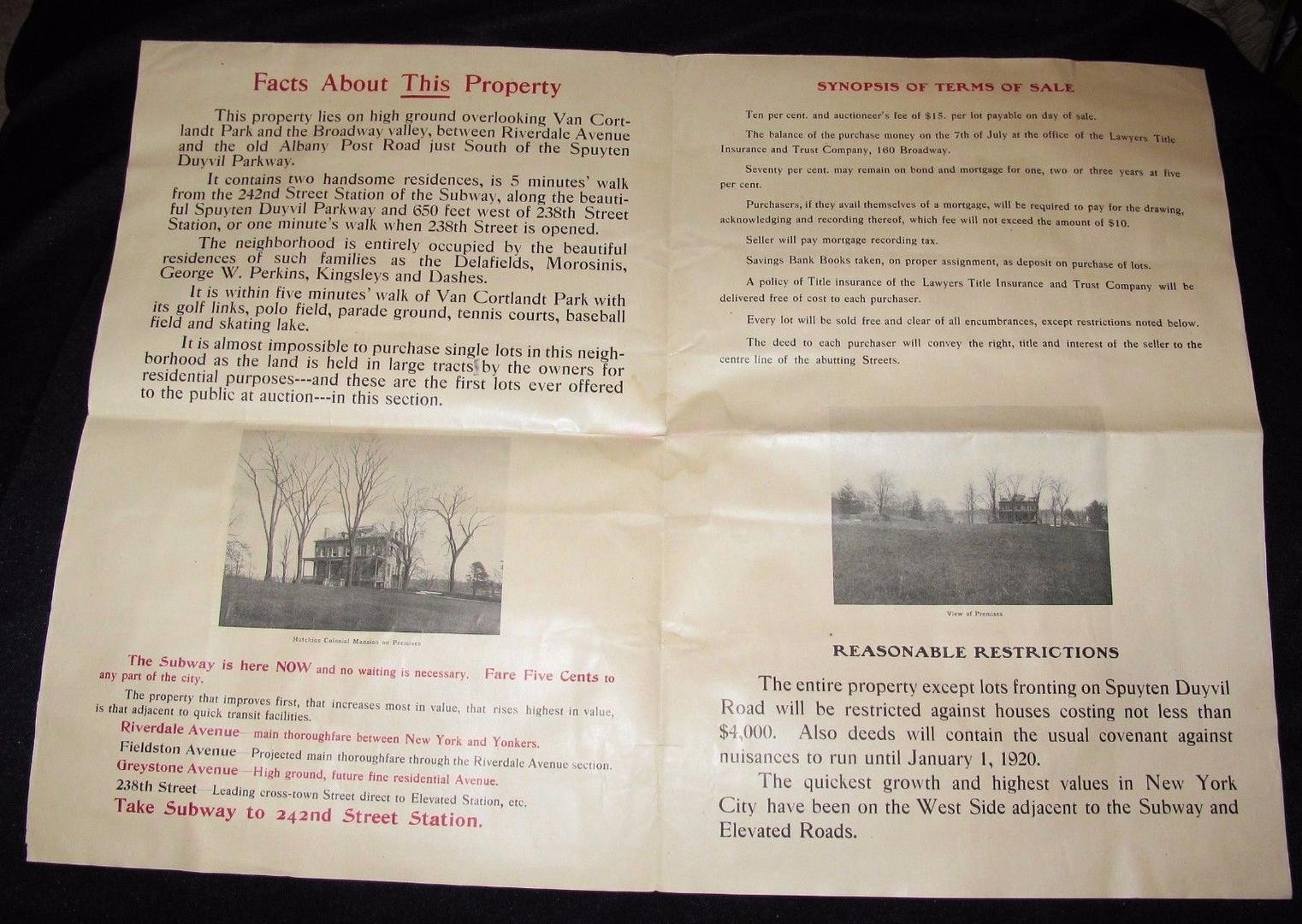
It seems that the building in the photos was indeed the homesite of Frederick Van Cortlandt II and part of the colonial “Upper Cortlandts.” The mansion house in today’s Van Cortlandt Park was passed on to James Van Cortlandt’s brother, Augustus, who resided there until 1823–living into his mid-90’s. According to the above-mentioned 1790 census, Augustus held 17 enslaved people at the plantation.
-
This reply was modified 7 years, 10 months ago by
ndembowski.
-
This reply was modified 7 years, 10 months ago by
April 2, 2018 at 8:45 pm in reply to: The Enslaved People of Riverdale, Kingsbridge, and Spuyten Duyvil #372The following advertisement was placed in the June 13, 1774 issue of the New York Gazette and Weekly Mercury.
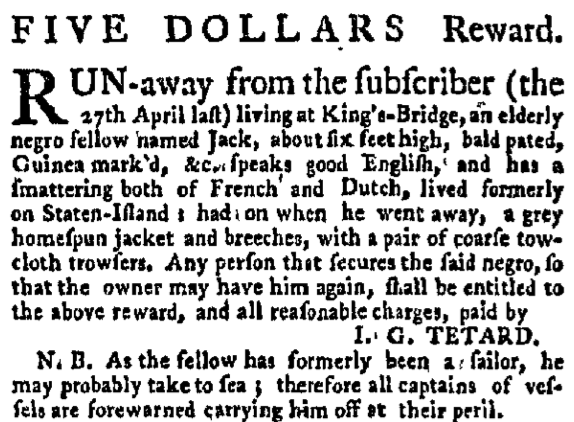
According to the ad, Jack, a “negro fellow,” had apparently run away from “I. [or J.] G. Tetard.” This must have been either a misprint of J. P. Tetard or an unidentified relative of John Peter Tetard, who resided in Kingsbridge. Who was John Peter Tetard? He was a minister and a teacher and eventually became a chaplain to the patriots in the American Revolution. But before that he ran a boarding school in Kingsbridge. This was the first school in the area. It is perhaps best described by the following ad that also appeared in the New York Gazette and Weekly Mercury for August 24, 1772:
This is to inform the PUBLIC, That the Revd. J. P. Tetard, late Minister of the reformed Church in this City, has lately opened his BOARDING School at his House near King’s Bridge, (within 15 Miles from New-York) where he teaches the French Language in the most expeditious Manner, together with some of the most useful Sciences, such as Geography, the Doctrine of the Sphere, ancient and modern History, Logic, &c. He likewise takes in Pupils for the learned Languages, the skillful reading of the Classics, and whatever is requisite to fit the young Students for Admission into any College or University. The house is remarkable for its healthy Situation, commanding one of the finest Prospects in the Government, and the Tutor’s Character and Capacity well known, he having lived with credit in the City of New-York upwards of fifteen Years; so that Gentlemen who will intrust him with the Education of their Children, may depend on their Expectations being properly answered.
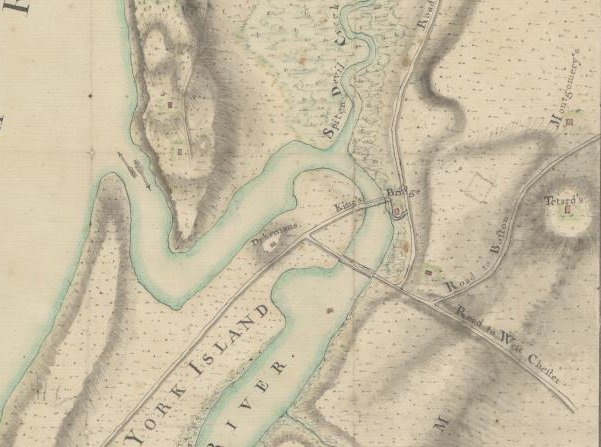
Tetard is the subject of a book by the Kingsbridge Historical Society’s founder, the Reverend William Tieck. In this book, America’s Debt to John Peter Tetard, Tieck describes Tetard’s home as “located within the triangle formed by modern Kingsbridge Terrace (the old Boston Post Road), Sedgwick Avenue, and Perot Street.” This location in Kingsbridge Heights would have certainly commanded a fine “prospect.” Visitors to the school would have had a view of Marble Hill and Inwood below with Spuyten Duyvil Hill and the Hudson River Palisades in the distance. There are several maps depicting the Tetard house in this spot, including the below map from the Clements Library at the University of Michigan. Note “Tetard’s” on the far right of the map.
As for Jack, who escaped slavery, he seems to have had quite an interesting background–an elderly former sailor, who spoke at least three languages. It is unknown if he escaped to eventual freedom or if he was recaptured.
April 2, 2018 at 7:17 pm in reply to: The Enslaved People of Riverdale, Kingsbridge, and Spuyten Duyvil #370The above-mentioned George Tippett’s great-grandson, Gilbert Tippett, lived in Spuyten Duyvil during the American Revolution. Gilbert’s story is very interesting and long so I won’t get into it all but he was a loyalist, who eventually lost his lands after the revolution. Not too long ago, I learned that Gilbert held an enslaved person when I stumbled across this document in an online auction:
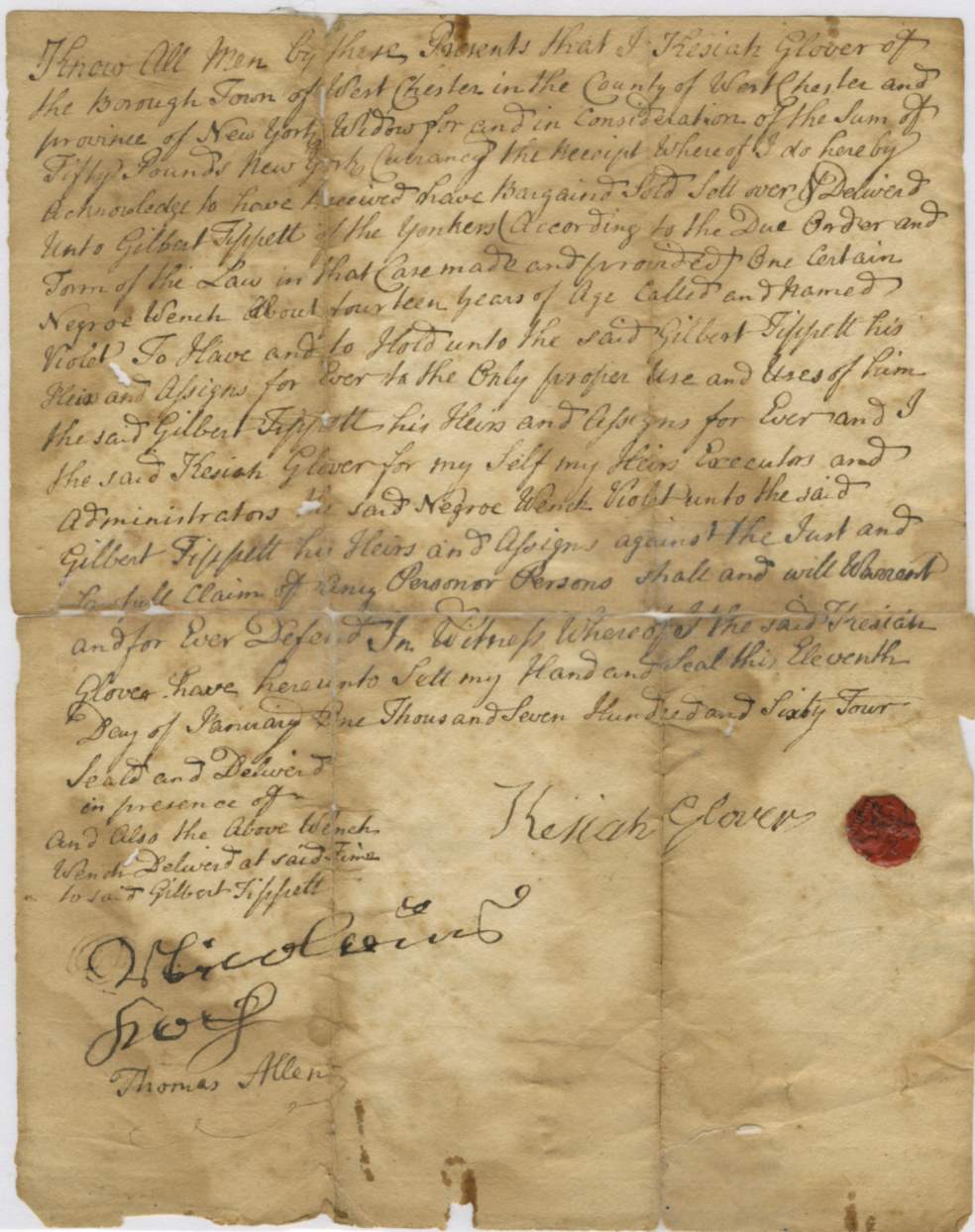
It indicates that Kesiah Glover of Westchester sold a 14 year old girl named Violet to Gilbert Tippett in 1764 for 50 pounds (New York Currency). The document describes her as “One Certain Negroe Wench About fourteen years of Age Called and Named Violet.” According to another document of the same date, Kesiah Glover got into some legal trouble and was ordered to pay James Ferris (of Westchester) 100 pounds. Gilbert Tippett was to sell Violet if Kesiah Glover was unable to pay what she owed to Mr. Ferris. In summary, Gilbert Tippett procured a slave that he was holding in escrow for Kesiah Glover–but in the meantime Gilbert “owned” this enslaved person. The legal language of this transaction for a 14 year old girl sends a chill up the spine as she is treated as any commodity.
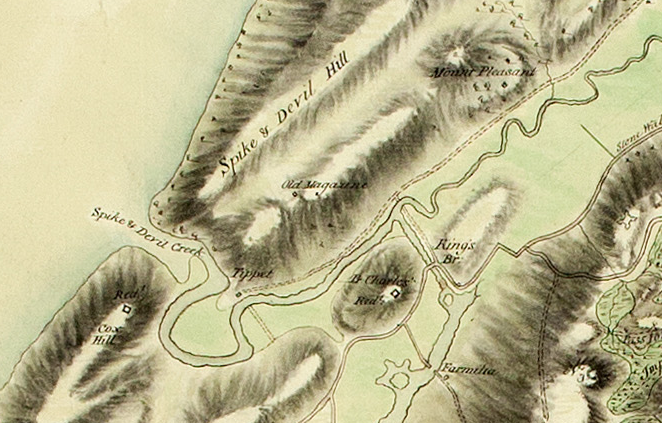
There is no way of knowing what life was like for Violet other than the location of her home. According to the will of Gilbert Tippett’s grandfather, Gilbert’s property was on the east half of Spuyten Duyvil neck–sometimes referred to as “Tippett’s Neck.” Maps from the revolution indicate a couple of structures in that area. The below map, a screenshot taken from the Clements Library digital collection, shows a building on the Spuyten Duyvil Creek west of Marble Hill. This is where Violet probably lived with Gilbert Tippett. During the revolution, Gilbert operated a ferry at Spuyten Duyvil close to this spot.

In this other map from 1781, also from the Clement’s Library, the structure is labeled as belonging to “Tippet.”
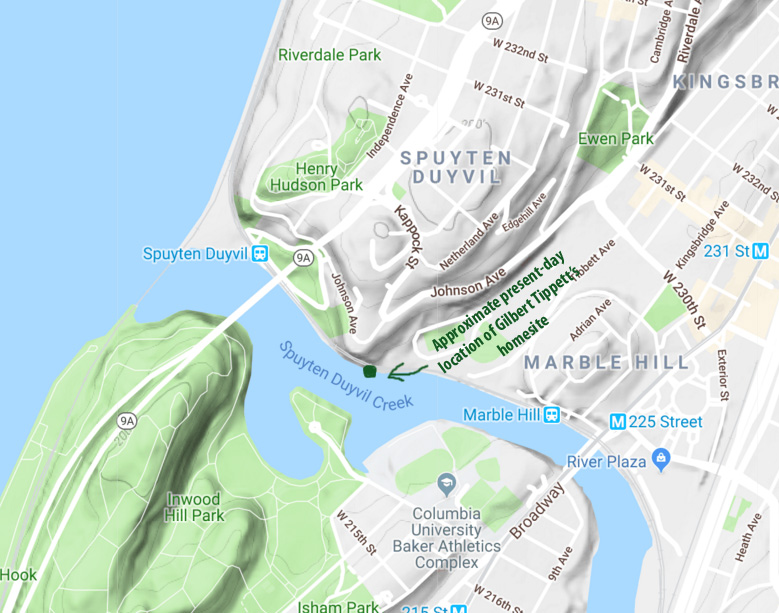
Today, the site of Gilbert Tippett’s home might no longer exist. As you can see in the previous maps, it was situated on a peninsula surrounded on three sides by the Spuyten Duyvil Creek. That peninsula was eradicated when the Harlem River Ship Canal was cut through that land. Below is a current map depicting the canal. For some reason, Google labels this waterway “Spuyten Duyvil Creek” despite the fact that it is no longer a “creek” but a wide, deep, and turbid canal.
At some point between the date of her purchase by Gilbert and the end of the American Revolution, Violet ceased to be in Gilbert’s “possession.” But Gilbert’s slave-holding did not end with Violet. We know these things because of certain events that occurred at the conclusion of the American Revolution.
Throughout the war, the British had hoped to entice enslaved Black people to flee their patriot masters and join the loyalist cause. Many did so and ended up in British-held New York until the end of the war in 1783. According to the Treaty of Paris, which ended the war, the British were supposed to return the formerly enslaved refugees to their American masters. However, Sir Guy Carleton, then Commander in Chief of British forces, refused to comply with the provision and did not return the Black refugees. According to Carleton, it “would be a dishonorable Violation of the public Faith pledged to the Negroes” to return the enslaved people to their captors and subject them to “Execution and others to severe Punishment.” Therefore, when white loyalists fled New York for Nova Scotia in 1783, many who had escaped slavery from patriot “masters” kept their freedom and went along with them. To America’s patriot leaders, this was an outrage. James Madison denounced Carleton’s actions as Black refugees, such as Harry Washington, who had escaped from George Washington, were allowed to retain their freedom in Nova Scotia and the Caribbean. Those enslaved by loyalists, however, were not as lucky. The British allowed loyalists to keep enslaved people in bondage elsewhere in the empire after fleeing New York. Slave or free, all of the Black people that were evacuated from New York in 1783 on British ships had their personal information recorded in a document called the “Book of Negroes,” which was created in the event that the British were forced to return the formerly enslaved people to their patriot masters. In this book, two Black children, Joe and Nancy (aged 10 and 11 respectively), are recorded as slaves belonging to “Gilbert Tippet.” They set sail aboard the Joseph in March of 1783 bound for Annapolis, Nova Scotia. Joe is described as a “stout boy” and Nancy as “incurably lame.”

That is all we know about Joe and Nancy. Could they have been the children of the aforementioned Violet? Possibly. She would have been about 23 years old in 1773 when Joe was born. If the children grew up in the house at the Spuyten Duyvil Creek they would have witnessed their “master’s” temporary imprisonment by the patriots for speaking ill of the patriot army in 1776. They would have seen the British army fight their way past their home in the Battle of Fort Washington later that year. They would have lived next to a Hessian garrison and heard many skirmishes fought in the area around their home. Perhaps they even encountered an unexpected visitor on July 14, 1781. On that date, Washington sent very specific orders to Colonel Alexander Scammell of his elite light infantry. Washington wrote, “At the mouth of Spiten Devil, it must be observed whither any Water Craft lies there, whether any Person lives in the House at the Point.” At that time, Washington was planning an assault on New York City through Kingsbridge that never came to pass. As the war came to a close, the enslaved children would have been taken to the city where they would board the Joseph and set sail for Annapolis, Nova Scotia. I would not imagine the world made very much sense to Joe and Nancy. Interestingly, aboard the same ship, according to the “Book of Negroes,” was a Black refugee named Violet Moore listed at 30 years old from New York–formerly enslaved by William Hedden (a common surname in the area around Westchester). There is no evidence to indicate that this is the same Violet once held by Gilbert Tippett–just the first name is the same and the age roughly fits.
According to a 1784 census of Annapolis, Nova Scotia, Gilbert Tippett had one “servant.” It is not clear if this was Joe, Nancy, or someone else. The Tippetts must not have loved life in Nova Scotia as they moved back to New York and settled in the Albany area. An 1800 census records “Gilbert Tippets” as a resident of Ballston, NY, where he lived with his wife, Susannah. The household is recorded as having had enslaved people. It is therefore unknown what happened to Violet, Joe, and Nancy.
Dan,
I bet you’ve probably already seen Cole Thompson’s article: http://myinwood.net/johnson-iron-works/
Another resource is Thomas Henry Edsall’s History of the Town of Kingsbridge. It is the first history written about the area and is full of interesting information that is hard to find anywhere else. It was written in the 1880’s and includes a page on the foundry.
Other than that and the Tieck book, I don’t know of anything else. Good luck and please let us know if you find any other resources.
Someone recently auctioned off a civil war cannon that was forged in the Johnson Foundry. There is a great description:
I know that the estate was sold in lots but I could not find how much they went for.
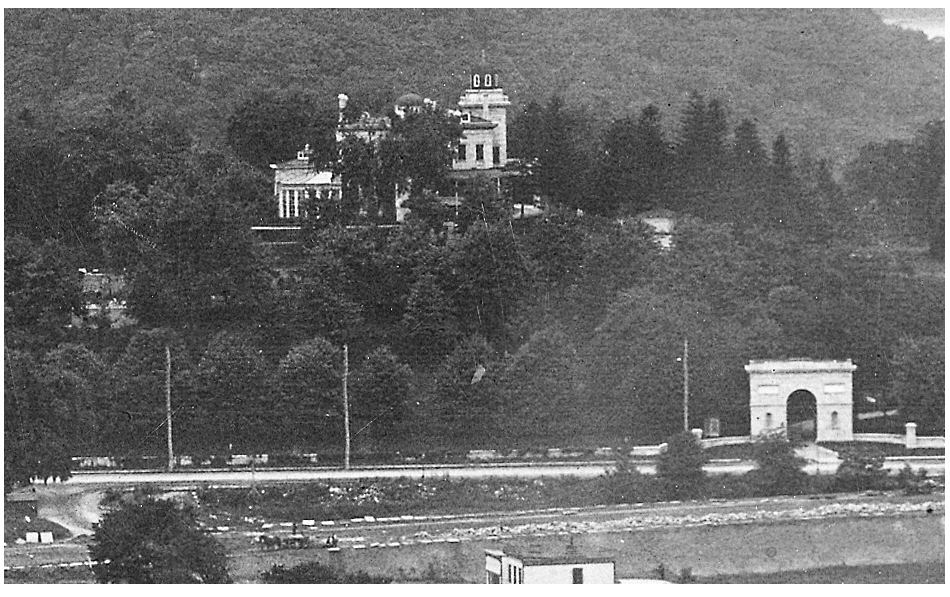
We could definitely do stuff on the estate area. But I thought you’d get a kick out of this photo depicting some of the original old mansions in your neighborhood of Spuyten Duyvil Hill. These places were not only gorgeous homes but had incredible views of the creek and river.
Here is the link to a high-resolution version.
I’ve always assumed the Seaman-Drake arch was built of this marble but maybe I’m just connecting dots.

This article is the most extensive I’ve read on the history and uses of the marble:
It is from a diary but it is transcribed online here:
http://www.revwar75.com/library/bob/Hunter1776.htm
One interesting thing is that the writer refers to “Congress Bridge” as a destination. The only bridges out of Manhattan would have been the King’s Bridge and Dyckman’s Bridge. It would seem logical that the patriots would have renamed the King’s Bridge to something like “Congress Bridge.” Oddly though, the writer refers to both King’s Bridge and Congress Bridge, as if they are two different bridges.
Thanks for the info. I always wondered about that place. It really stands out as pleasing architectural landmark in an area surrounded by “the city ugly.” I am not sure if the house I live in is notable but I did learn one interesting fact about it. My landlord is only the second owner of this single family home on Arlington Avenue. According to him the first owner was Mary Lydon, whose son had it built for her in 1930. What’s interesting about that is that her son was Gene Tunney, the heavyweight champion of the world from 1926 to 1928.
Mark Twain had some funny stuff to say about a crime spree in the “Estate Section” of Riverdale back in 1901.
-
AuthorPosts
