
Forum Replies Created
-
AuthorPosts
-
<p style=”text-align: right;”>I think it looks like the start of construction for an over pass for the Henry Hudson Parkway which would radically change and impact the Riverdale community during construction and years to come. I guess it was a response to Robert Moses gift to Riverdale, starting around the Christmas Season</p>
<p style=”text-align: right;”>F</p>Nick,
My memory is shot but I do remember someone who owned this Pharmacy had a child who became famous, Maybe as a radio or tv announcer ?
Isaac Gale Johnson’s five sons — Isaac Mattison, Isaac Bradley, Gilbert Henry, Arthur Gale and James Wagner — entered the business in their youth after the plant was opened. These sons were to be known by their initials — I.B., I.M., and so on. In spite of the differences in age, all of the brothers got along harmoniously. They lived near each other on Spuyten Duyvil Hill. His spouse was Jane Eliza Bradley Johnson, BIRTH 22 Jul 1832 Sunderland, Bennington County, Vermont, Died 7 May 1906 (aged 73)Spuyten Duyvil, Bronx County, New York. It would appear that the steps were named for their mother’s maiden name “Bradley”
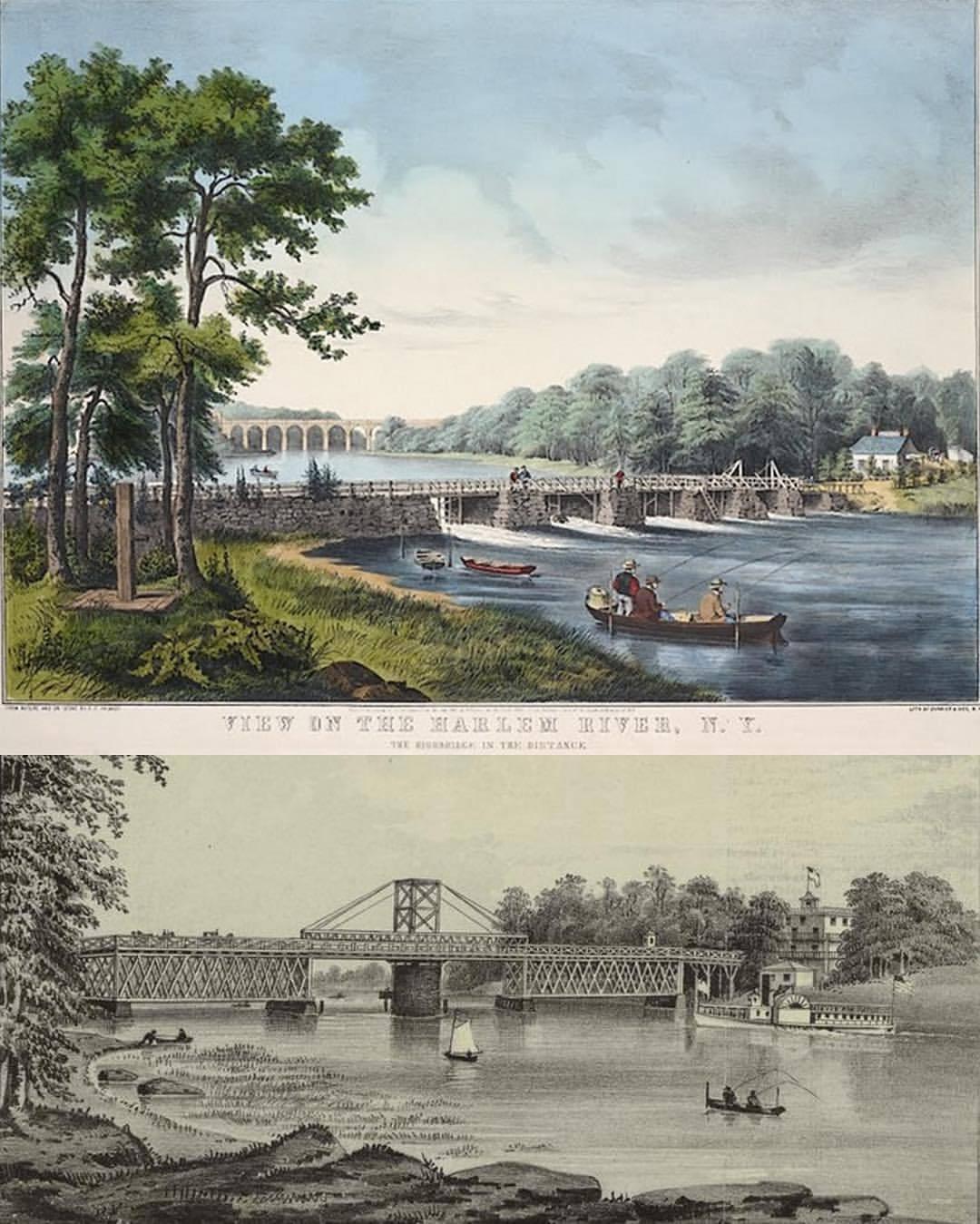
Macomb’s Dam Bridge – Currier and Ives 1852 and the Swing Bridge 1861 at the same location
Nick,
Not to be picky, but the Macombs dam bridge crossed over to Manhattan in 1814 in 1861 it was replaced by a wooden swing bridge called the Central Bridge
Nick,
This has got to be the best scholarly research I have ever read about the Bronx. I have always been focused on the Mosholu Parkway South section from Gun Hill to Webster Avenue. I knew that the road was called Middle Brook Road, since the stream that was there , know as the Mill Brook, was often called Middle Brook. Since the Boston Post Road crossed this stream at Van Cortlandt East, I just assumed the Indian name of the Mill Brook was “Mosholu”. I was not aware that Tibbetts Brook was called “Mosholu” at any time, since George Tibbetts acquired his property in 1668. Just thought “Tibbetts Brook” was the original name. I believe you have it correct, 100 %.
Now I can not wait for Kappock Street and Katonah Avenue!
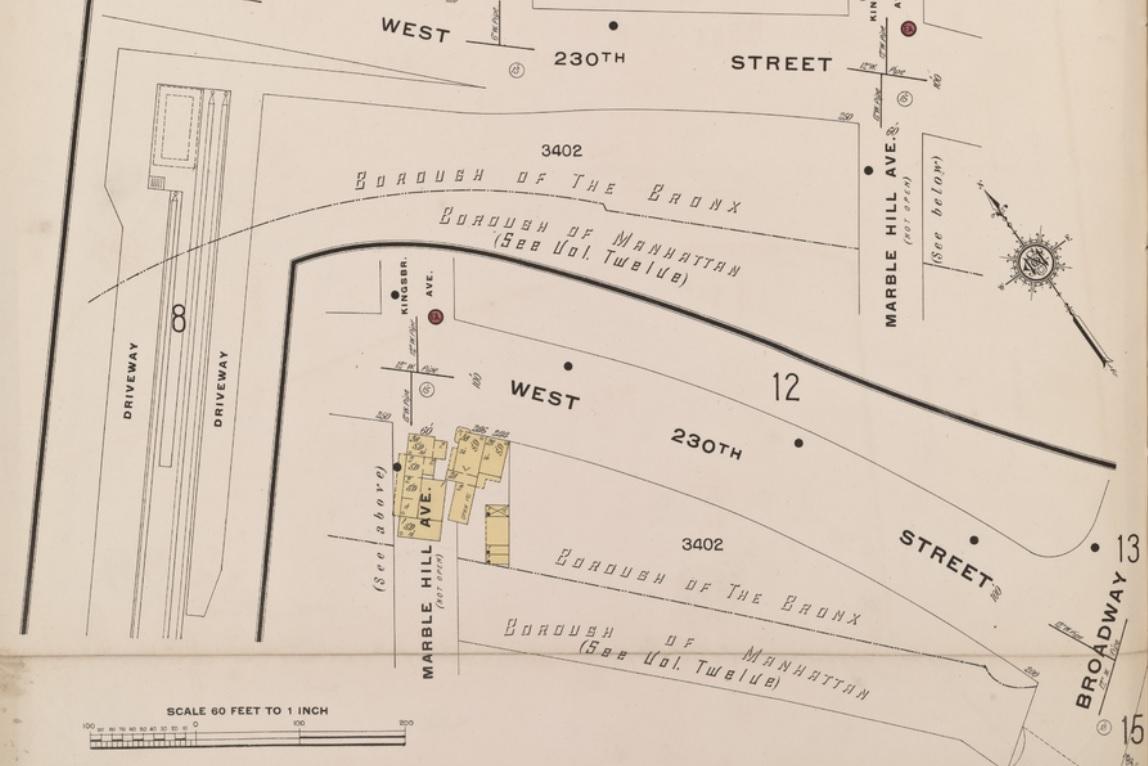
After further review…….it looks like a Bronx reception. From this old map, the building is in the Bronx
PS – I also like the view of the former Roman Catholic Orphanage which later became the Veterans Hospital off in the distance.
Interesting picture, but note it would appear to be on the Manhattan side.
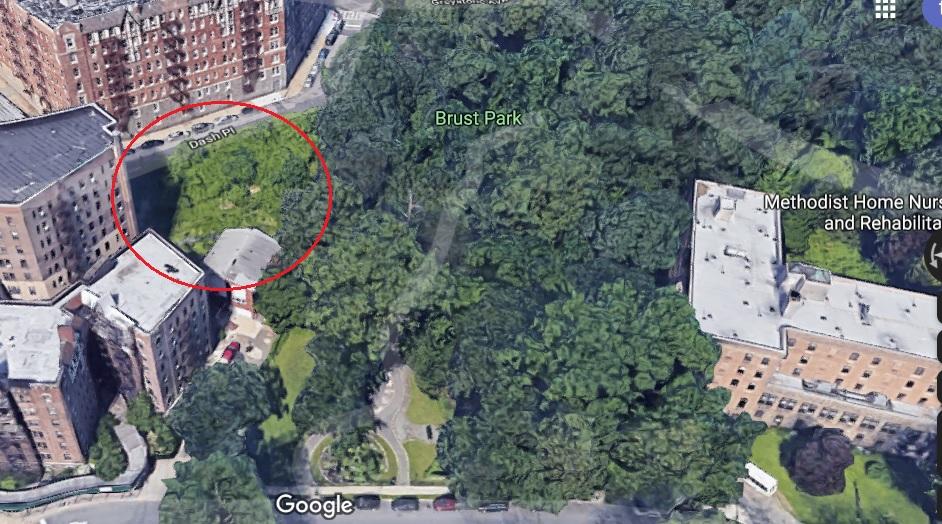
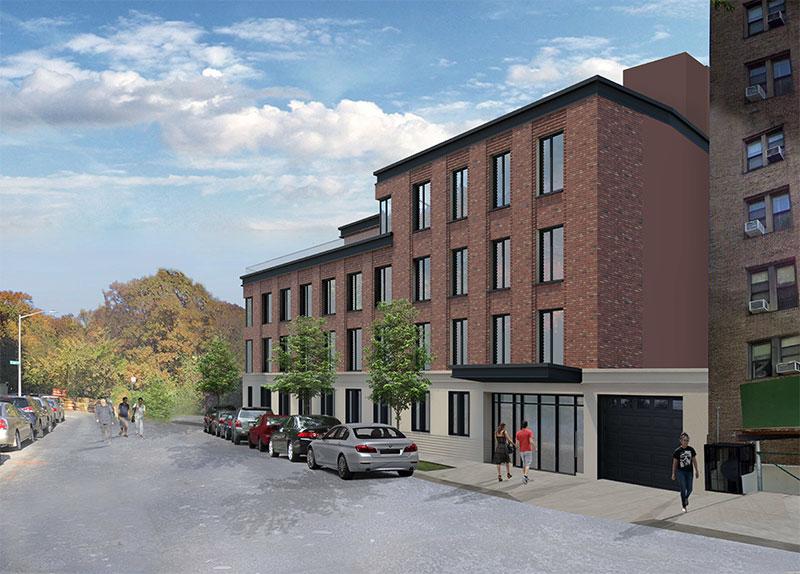 3893 Waldo Avenue – Designed by Kutnicki Bernstein Architects, is located in the Riverdale section of The Bronx at 3893 Waldo Avenue. The structure will rise five stories above ground and measure 41,177 square feet with 29 rental units. A small portion of the property will support unspecified community facility space.
The building features a simple red brick façade that is set above light-colored masonry at the ground floor.
<p style=”text-align: center;”>According to John McNamara in his great work, “History in Asphalt”, Bradley Terrace received it’s name in 1927. The NYC engineering department had no information why that name was given.</p>
2019 Aerial view of the Henry Hudson Parkway
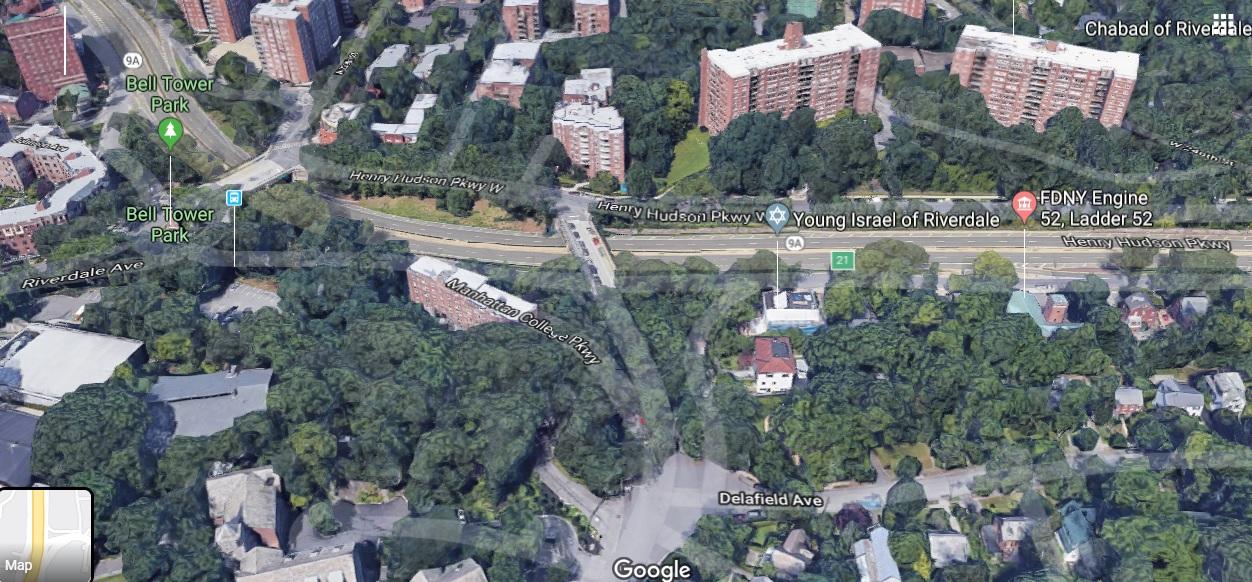
Peter is correct about the Arrowhead inn. From my Book “Northwest Bronx” Thomas X. Casey and Bill Twomey
Ben Riley’s Arrowhead Inn was built on a 17-acre site and opened in April 1924 at 246th Street
and Riverdale Avenue. It was designed by Dwight J. Baum. Ben Riley’s establishment closed in
1941 and was transformed for services by Rabbi Charles E. Shulman of the Riverdale Temple
from 1947 to October 1952. The Briar Oak housing complex was then built on the site, and a
new Riverdale Temple was dedicated on September 17, 1954. see my postcard image ( there are about 16 )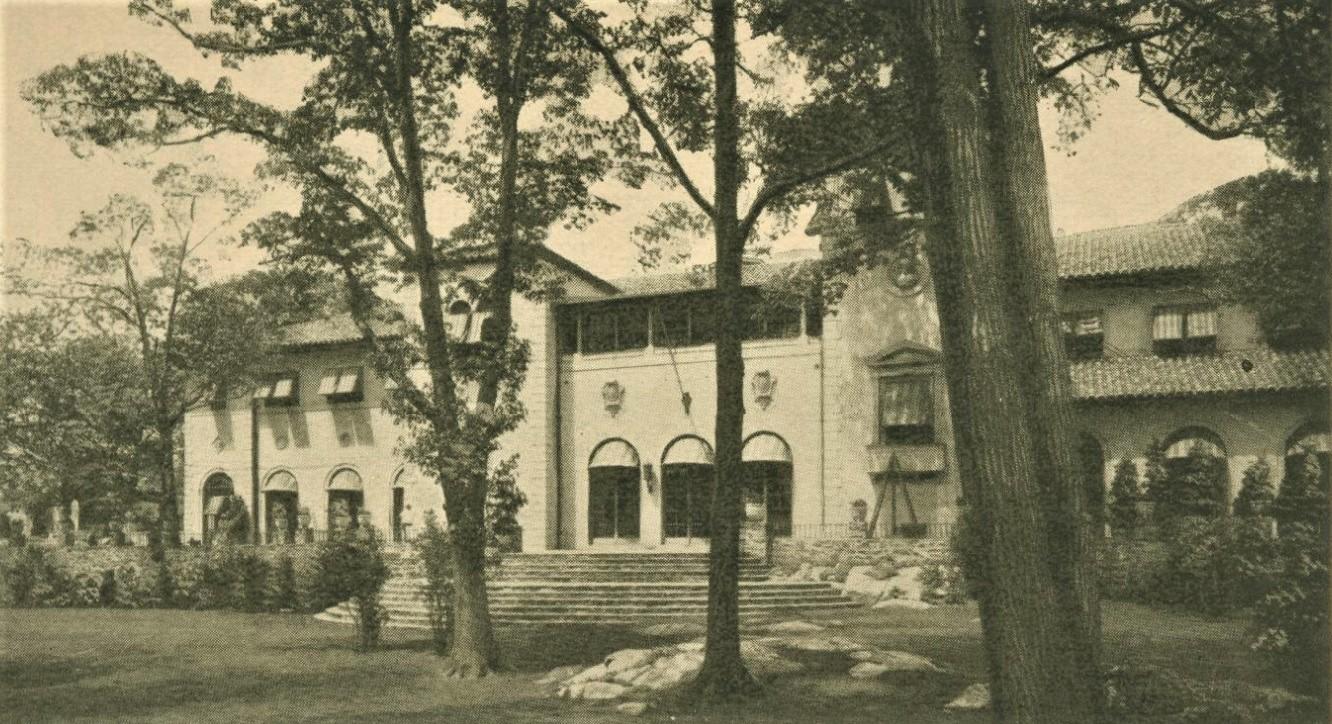
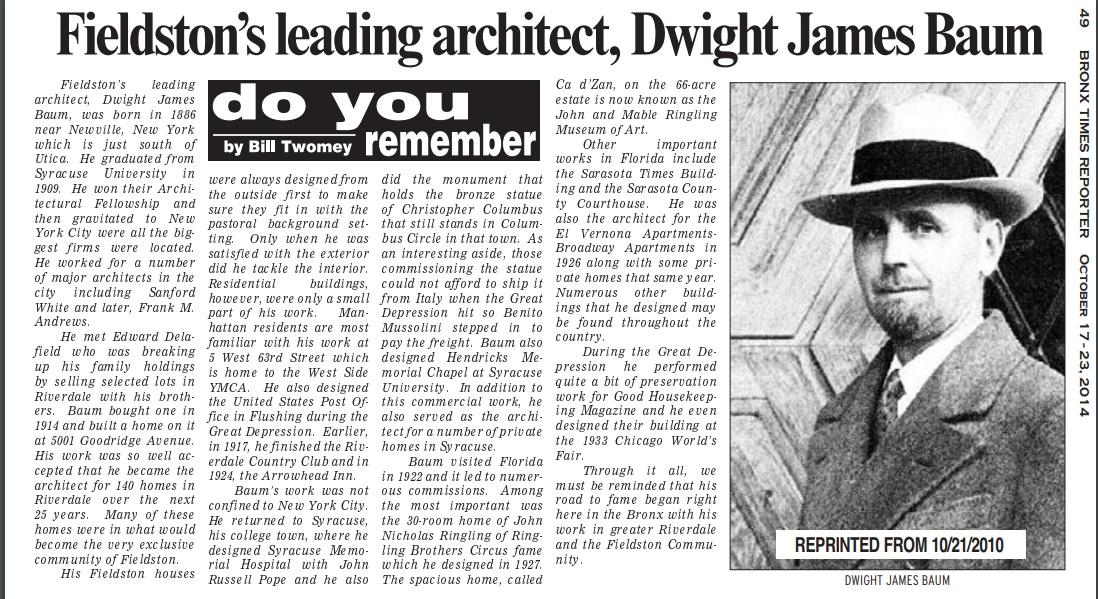
The Dwight James Baum Papers,
Special Collections Research Center,
Syracuse University Libraries does not have a file on the Riverdale Monument.My old friend Bill Twomey of the Bronx did an article on Baum that was recently republished
Dwight James Baum was the architect…. I wonder where his achives are now? Great job with maps and images. I have also long wondered where and when it was moved from originally.
I think this must be from a negative of Charles Buck, see postcard below
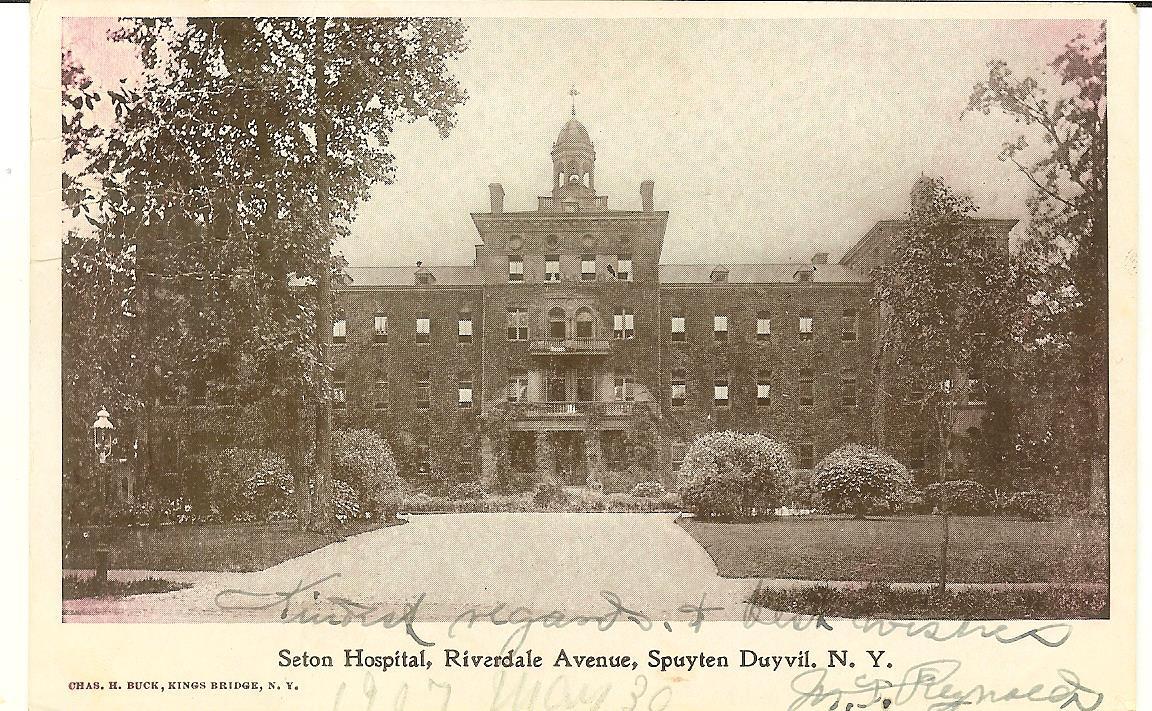
Dear Alan, Charles Buck only took photo’s of prominent buildings and mansions. I am sure the 1909 image on the postcard is it. The wedding was in 1914 and there was not that many houses with that footprint. McKelvey died in 1947 and I am sure his estate sold the last house “Bonnie Brae” before that. The other projects, Rosa Bonheur, 1924,Villa Brontë, 1926, Villa Victoria in 1926 In 1933, Mr. McKelvey lost Villa Victoria in foreclosure, and the Rosa Bonheur co-op failed in 1941. John McKelvey said that his father “made a lot of money, and he lost a lot of money — almost everything in the building of the Villa Victoria — but he was able to regroup, and he always took it day by day.” From 1933-1941 it was probably developed. The Houses that are near “Bonnie Brae” are substantial but built in the 1940 – 1970’s
John Jay (J.J.) McKelvey was born Sunday, 24 May 1863, in Sandusky, Ohio, to the parents of John McKelvey and Jane Rowland Huntington McKelvey. J.J.’s paternal grandparents were Matthew McKelvey and Nancy Adams McKelvey, and his paternal great-grandparents were William McKelvey and Mary Toppings McKelvey along with Bildad Adams and Mary Hines Adams. William McKelvey of Scotch-Irish American, Revolutionary War regality removed with an assembly after the war to the Western Reserve; where John McKelvey fashioned and financed Sandusky and a section of its first short line railroad, which eventually enveloped by the Pennsylvania Railroad. Whereas, J.J.’s maternal grandparents were Apollos Huntington and Deborah Rowland Huntington with his maternal great-grandparents being American Revolutionary War soldier Elisha Huntington and Esther Ladd Huntington and great-grandparents of the William Rowland lineage. J.J.’s five siblings included: Janet Huntington McKelvey Swift, Alice Rowland McKelvey Milne, Jennie Adams McKelvey, Charles Sumner McKelvey, and Ralph Huntington McKelvey. J.J.’s sister Alice and father John helped document their family’s English and Welsh pedigree, colonial ancestors, war-time service, and Fire Lands migration.[7]
After successfully completing his college course, J.J. initially married Mary Clark Mattocks on 12 July 1887 in Cleveland, Cuyahoga County, Ohio, at the bride’s childhood home.[8] Before settling into their described “Bonnie Brae” on the Hudson River at Spuyten Duyvil, J.J. and Mary visited her mother in Los Angeles, California to consolidate contiguous land for the completion of their estate on Palisade Avenue, New York City.[9]
A cherished piece of Spuyten Duyvil’s past could be in jeopardy. And while the Villa Rosa Bonheur might not be completely obliterated, it could be fundamentally changed.
Kevin McDermott, who’s lived in the neighborhood for more than a decade, wanted to know what was happening to the Villa Rosa Bonheur on Palisade Avenue near the Spuyten Duyvil train station, a charming, stony structure clinging to the cliff side under the Henry Hudson Bridge.
Built in 1924 as a co-operative by John J. McKelvey — a lawyer, writer and developer, who also was the first editor-in-chief of the Harvard Law Review — the seven-unit apartment building hit the market last year, according to published reports.
McKelvey — who also built the Villa Rosa Bonheur’s sisters, the Villa Charlotte Brontë and Villa Victoria around the same time — had more than money on his mind when he created what would be Riverdale’s first apartment houses. Alarmed by what he called the encroaching “city ugly” — the wave of high-rise development spreading through northern Manhattan and other parts of the Bronx at the time — McKelvey’s answer, according to the Lehman College Art Gallery, was to construct cooperative apartments resembling villas made up of individually owned duplex and triplex studio homes.
The marriage of Lowell H. Brown, a son of Mr. and Mrs. Archer Brown of East Orange, N.J., and Miss Constance McKelvey, a daughter of Mr. and Mrs. John Jay McKelvey, took place yesterday in Edgehill Church, Spuyten Duyvil, and was followed by a reception at Bonnie Brae, the McKelvey country home. October 11, 1914, Page 11
Since the Buck postcard is from cir 1910, I also looked at the 1888 – 1914 map.
I do like that image and the way the lower house is in the appx angle from the main house. Take a look. Thank you, Tom
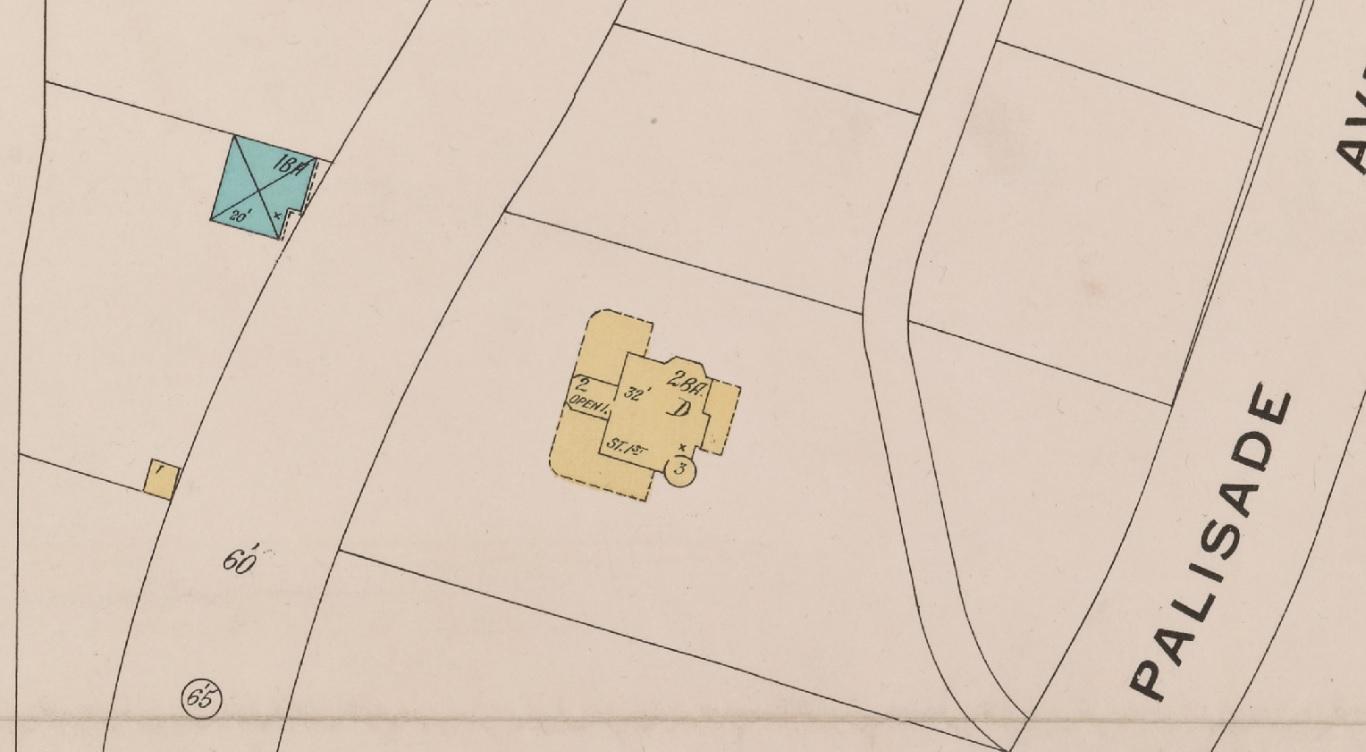
Yes, the small yellow house below Highpoint does look like a match.
Great detective work, now to find out who was the owner and if a photo can be found. Many Thanks
This is one of my Charles H. Buck titled “Private Residence, Spuyten Duyvil on the Hudson NYC”. I have scanned the area using google views and I do not believe the house is still standing. I have not found any image to identify it either. I am posting the image in hopes that one of our members may have a good lead and or know the address or former owner. Thank you
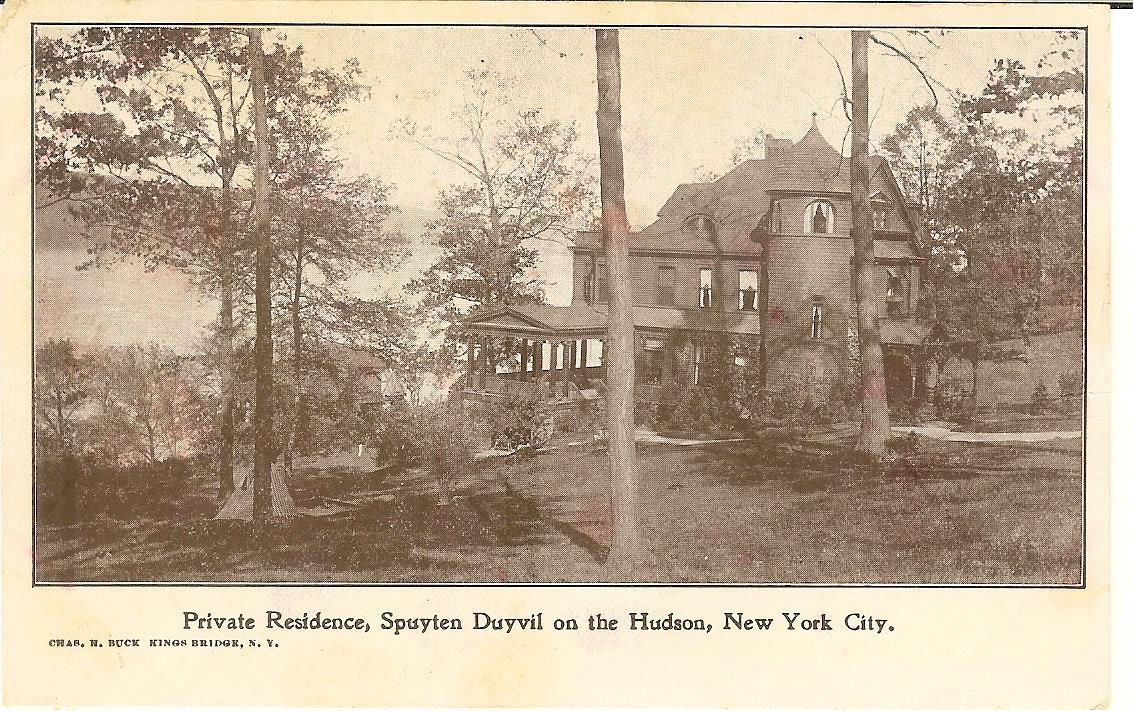
The writing on the postcard indicates it was either sent by Mrs Ervin of Kingsbridge or that the road in front of the gate leads to Mrs. Ervin’s house.
-
AuthorPosts
